Two different answers to the same problem
Both of these block out commuter noise well, but they suit different days. The AirPods Pro 3 disappear into a pocket and work best for people who are on the move: in and out of shops, walking between stops, taking quick calls or heading to the gym. The Sony WH-1000XM5 suits longer seated stretches, such as a train journey, a flight or an afternoon at a desk, where battery life and comfort over hours matter more than size.
This comparison uses manufacturer specifications, published feature lists and patterns in owner feedback, and both were checked as sold and dispatched by Amazon.ie at the time of writing. The AirPods Pro 3 went on sale in September 2025 as the successor to the AirPods Pro 2. The Sony is the older of the two: Sony has since followed the XM5 with the WH-1000XM6.
Noise cancelling and isolation
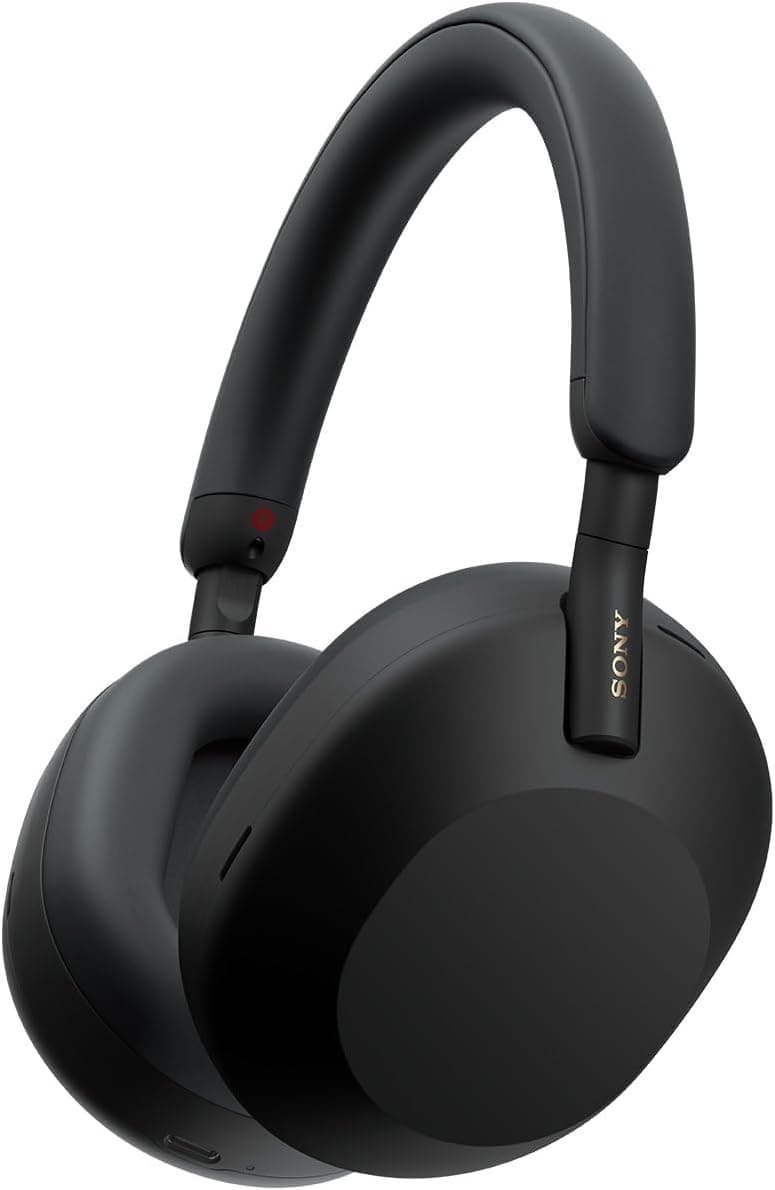
Over-ears have a natural advantage: the earcup seals around the ear and passively blocks a good deal of sound before noise cancelling even starts. The XM5 combines that with eight microphones and two dedicated processors, and its Auto NC Optimizer adjusts cancelling to your fit and surroundings. It is especially effective against the steady rumble of buses, trains and aircraft.
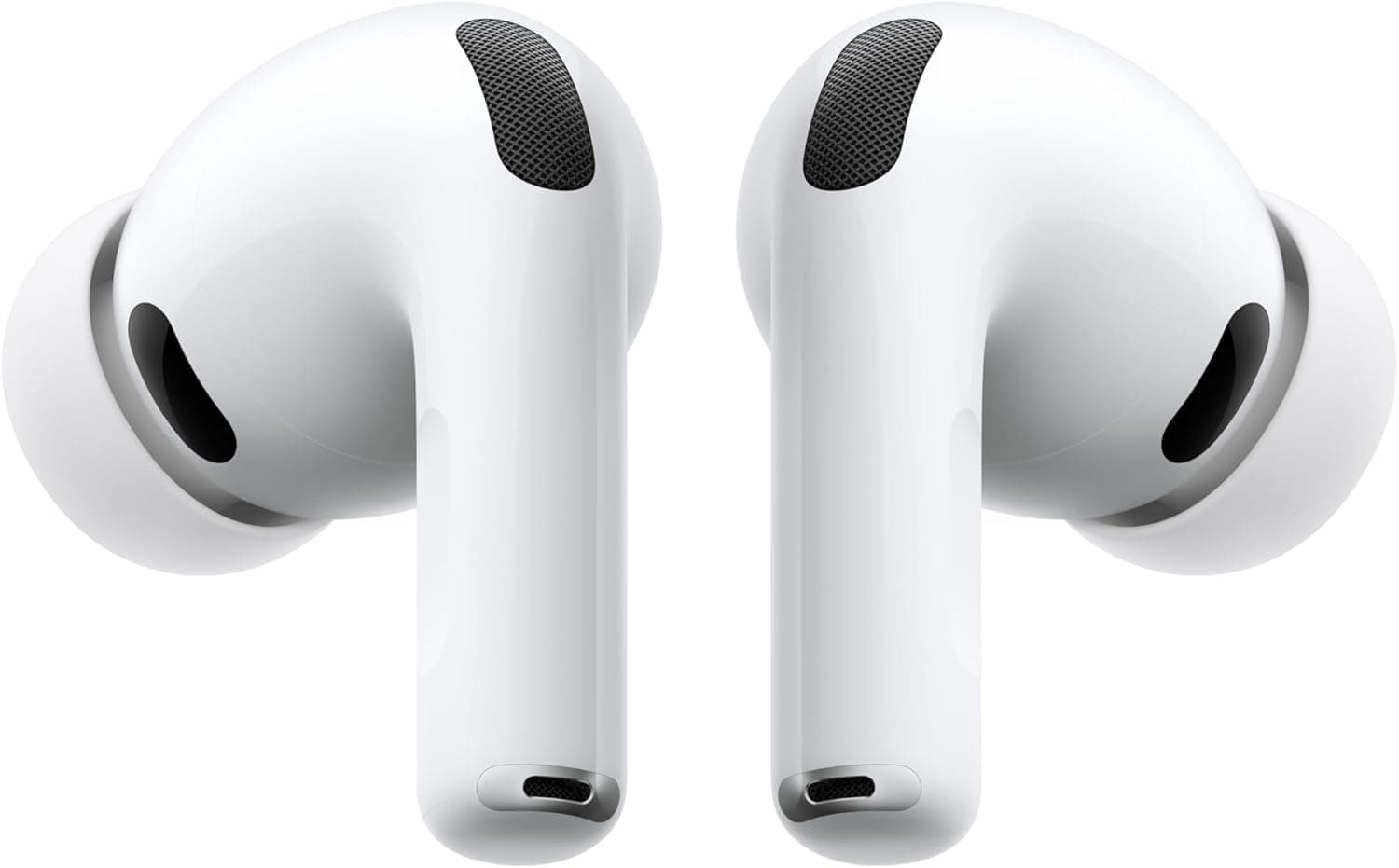
Apple says the AirPods Pro 3 remove up to twice as much noise as the AirPods Pro 2, helped by new foam-infused ear tips that now come in five sizes, including an extra-small XXS. That narrows the traditional gap between earbuds and over-ears, but earbud noise cancelling still depends heavily on fit. With a good seal they handle bus and street noise well; with a poor one, noise cancelling and bass both suffer. Try each tip size and use the ear-tip fit test in the iPhone settings.
Where the AirPods stand out is transparency. Apple’s transparency mode is widely regarded as one of the most natural-sounding available, Adaptive Audio blends it with noise cancelling automatically as your surroundings change, and Conversation Awareness lowers your music when you start talking to someone. That is useful when you are moving between a quiet office and a busy street, or need to hear a station announcement without taking the earbuds out.
Battery life
This is the biggest practical difference. The XM5 runs up to 30 hours on a single charge with noise cancelling on, enough for most people to charge once a week. The AirPods Pro 3 last up to 8 hours per charge with noise cancelling on, which is longer than the AirPods Pro 2, but the case brings the total to around 24 hours rather than the 30 Apple quoted for the older model. For a commute of an hour each way, that is fine as long as you keep the case with you. On a long-haul flight, the earbuds will need a break in the case partway through.
The AirPods case charges via USB-C, a MagSafe or Qi wireless charger, or an Apple Watch charger, which is convenient if you already have a wireless pad on your desk. Apple does not include a USB-C cable in the box. Five minutes in the case gives around an hour of listening. The XM5 charges over USB-C; Sony says a three-minute charge gives around three hours of playback with a USB PD charger, or about an hour with a standard one.
Portability, rain and workouts
The AirPods win clearly here. The case fits in a jeans pocket, and the earbuds and case are rated IP57 for dust, sweat and water, so a wet walk to the bus stop or a sweaty gym session is not a concern. Apple still says they are not designed for swimming or showering, and water resistance can decline with wear. They sit comfortably under a hood or woolly hat and stay put while walking briskly.
The AirPods Pro 3 also have a built-in heart rate sensor. With an iPhone they can track heart rate and calories for up to 50 workout types in the Fitness app, which is handy for runners and gym-goers who do not wear a watch. The Sony has no fitness features at all.
The XM5 does not fold, and its case is wide enough that it usually needs a bag. It has no water resistance rating, so it is better kept away from heavy rain, and over-ears get warm during exercise. They are also less convenient to wear with a hood up. If your commute is mostly walking or cycling, earbuds are the more practical format.
iPhone or Android?
For iPhone owners, the AirPods Pro 3 offer things no third-party headphones can: one-tap pairing, automatic switching between iPhone, iPad and Mac, Find My tracking with a speaker in the case, heart rate data in the Fitness app, and controls built into iOS settings. Some newer software features, such as Live Translation, also need a recent iPhone that supports Apple Intelligence and may not be available in every region or language.
On Android, the AirPods work as basic Bluetooth earbuds but lose most of those features, and there is no official Apple app for Android. The Sony works equally well on both platforms through its companion app, supports multipoint connections to any two devices, and adds LDAC for higher-bitrate audio on compatible Android phones. If you use Android, or mix a Windows laptop with your phone, the Sony is the more flexible choice.
Comfort and calls
Comfort is personal. Some people find any earbud tiring after an hour or two; others find over-ears warm and heavy. The XM5 has light clamp pressure and soft pads, and most owners find it comfortable for long stretches. The AirPods are light, and Apple redesigned the fit for more stability during exercise, but in-ear pressure can still become noticeable during long sessions.
Both handle everyday calls and video meetings well. Wind is the main problem outdoors for both, and neither fully eliminates it. Many people end up owning both formats: earbuds for walking, errands and the gym, over-ears for travel and focused work. For more options in each format, see our best noise-cancelling headphones guide, or compare two over-ears in Sony WH-1000XM5 vs Bose QuietComfort.
Longevity and running costs
Battery wear is worth thinking about with any wireless audio. Earbud batteries are tiny, so the gradual loss of capacity that all lithium-ion batteries experience is more noticeable: after a few years of daily use, an earbud that started at eight hours will deliver less. The batteries are not owner-replaceable, although Apple offers a paid battery service. A larger over-ear battery starting from 30 hours has much more headroom before the decline affects a normal day.
Other wear parts are cheap for both. AirPods ear tips can be replaced, and replacement cushions for the XM5 are widely available. Earbuds are also easier to lose; Find My helps locate a missing AirPod, and Apple sells replacements for single lost earbuds. Over-ears are harder to misplace but more vulnerable to being crushed in a bag without their case.