Choosing a running watch
A good running watch does three things well: it tracks pace and distance accurately, it is easy to operate with cold, wet fingers in the dark, and it lasts a week or more between charges so it is ready when you are. Everything else, from training-load graphs to music storage, is a bonus. Most Irish runners do not need the most expensive model; they need the right one for how often they run and what they are training for.
Below is our main pick, a practical accessory, the alternatives worth comparing across Garmin, Coros, Polar, Apple and Fitbit, and buying advice for running through an Irish winter.
Our picks
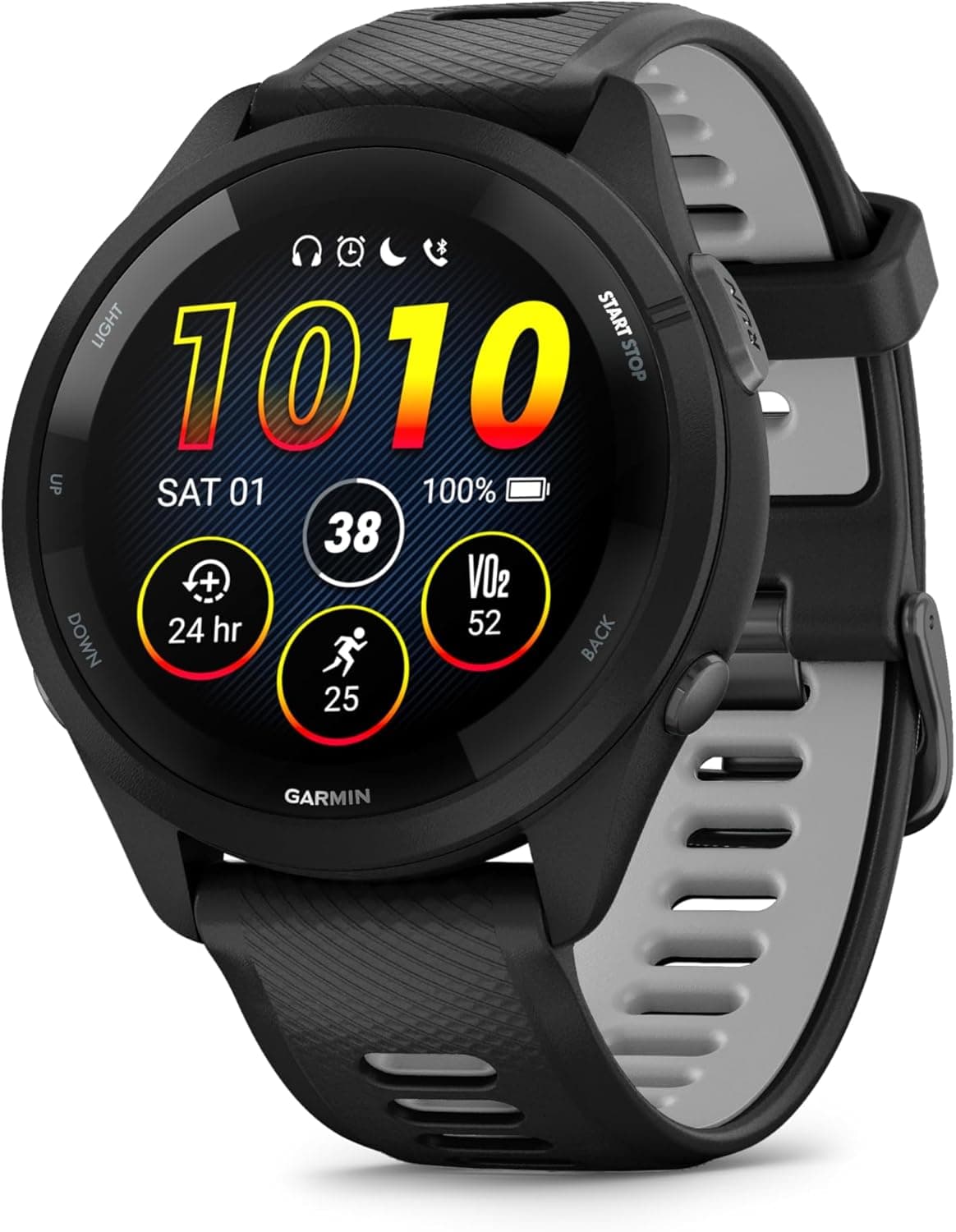
Garmin Forerunner 265 GPS Running Smartwatch with Bright AMOLED Touchscreen & Training Readiness
Best for: Regular runners training for 10k, half or full marathon
The Forerunner 265 sits in the sweet spot of Garmin's range. Its 1.3-inch AMOLED touchscreen is bright and sharp, but it keeps five physical buttons, which is what you rely on in rain or with gloves on. Multi-band GPS improves accuracy around tall buildings and tree cover, and the Morning Report pulls together sleep, HRV status and training readiness to suggest how hard to go. Garmin quotes up to 13 days in smartwatch mode and up to 20 hours of GPS. It suits anyone from a regular parkrunner to a marathoner who wants structured training without paying for maps.
Pros
- Physical buttons work reliably in rain and with gloves
- Multi-band GPS for better accuracy in cities and under trees
- Training readiness, HRV status and suggested workouts built in
- Bright AMOLED screen is easy to read at a glance
Cons
- No onboard maps for navigating unfamiliar trails
- AMOLED shortens battery life if you use the always-on display
- More features than a beginner who only runs parkrun will use
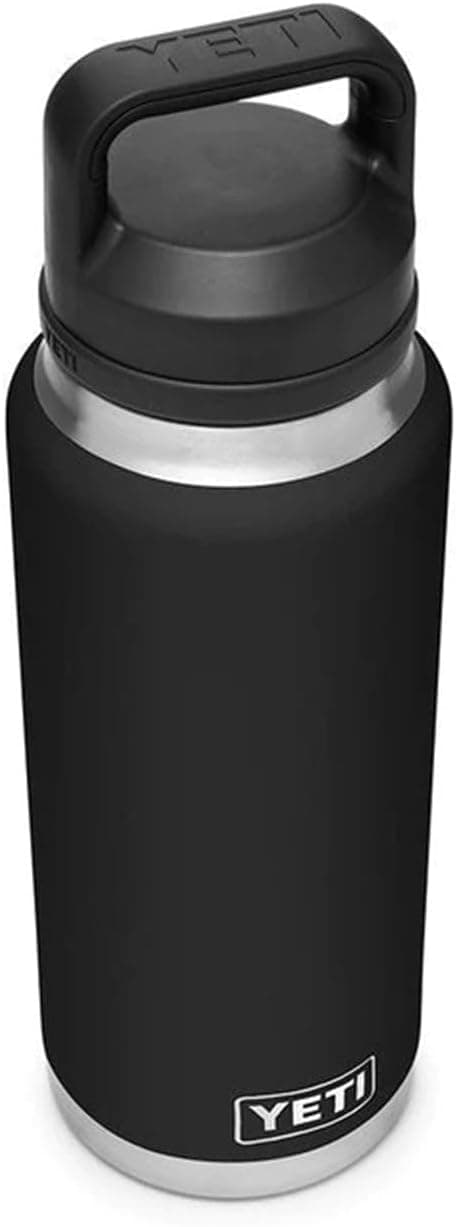
YETI Rambler 36 oz (1065 ml) Vacuum Insulated Stainless Steel Bottle with Chug Cap
Best for: Post-run hydration, sideline supporting and long days out
Not a watch, but a useful companion for long-run days. The YETI Rambler 36 oz (about 1 litre) is a double-wall vacuum insulated stainless steel bottle with a Chug Cap, so it keeps water cold in the car for after a summer long run, or tea hot while you stand at the side of a cross-country course in January. It is heavy and too big to carry while running, so think of it as a kit-bag bottle rather than a race-day one.
Pros
- Keeps drinks cold or hot for hours
- Dishwasher safe and built to survive being dropped
- Chug Cap is easy to drink from one-handed
Cons
- Too heavy and bulky to run with
- Premium price for a water bottle
Other running watches worth considering
Links open an Amazon.ie search filtered to items sold & dispatched by Amazon.ie. Availability changes.
- Search Amazon.ie
Garmin Forerunner 165
A cheaper AMOLED Forerunner with buttons and core training features; a strong first GPS watch for parkrun and 10k runners.
- Search Amazon.ie
Garmin Forerunner 965
Adds full onboard maps, a larger screen and longer battery life over the 265, for trail runners and ultra distances.
- Search Amazon.ie
Coros Pace 3
A very light running watch known for long battery life and a simple, focused interface at a mid-range price.
- Search Amazon.ie
Polar Pacer Pro
A lightweight Polar with buttons, a barometer and Polar's recovery and training-load tools.
- Search Amazon.ie
Fitbit Charge 6
A slim fitness tracker with built-in GPS; fine for casual runs and all-day health tracking, but limited as a training tool.
If you use an iPhone and want one device for everything, an Apple Watch is a capable running watch, with good GPS and the Workout app, but it needs charging far more often than a dedicated running watch and touch controls are harder to use in the rain. It only works with an iPhone.
The Dublin Drop — Friday Deals
Price drops on Amazon.ie stock, once a week. No customs fees, no spam.
Free. No spam. Unsubscribe anytime. We only send verified domestic deals.
Comparison table
| Garmin Forerunner 265 | YETI Rambler 36 oz | |
|---|---|---|
| Type | GPS running smartwatch | Insulated bottle |
| Display / capacity | 1.3-inch AMOLED touchscreen | About 1 litre (36 oz) |
| Controls / closure | Touchscreen plus 5 buttons | Chug Cap |
| GPS / build | Multi-band GNSS with SatIQ | 18/8 stainless steel, double-wall vacuum |
| Battery / care | Up to 13 days smartwatch, up to 20 hours GPS | Dishwasher safe |
| Best for | Structured training at any distance | Kit bag, car and sideline |
Buying advice for running in Ireland
Buttons beat touchscreens in the rain. Rain and sweat make touchscreens register phantom taps or ignore you entirely, and gloves make it worse. Every watch we suggest for serious training has physical buttons for start, stop and lap. If you love a touchscreen, make sure you can lock it during a run.
Battery life matters more than you think. A watch that lasts a week or two between charges is ready for a spontaneous run. As a rough guide, look for at least 15 hours of GPS if you are training for a marathon, more for ultras and long hill days. AMOLED screens look great but use more power with the always-on display enabled.
GPS accuracy. Multi-band (dual-frequency) GPS helps most in city centres, among tall buildings and in dense woodland. On open roads and parks, standard GPS is usually fine. Whatever you buy, let the watch find a satellite lock before you start, especially on the first run after travelling.
Parkrun. Ireland has a large network of free, weekly, timed 5k parkruns on Saturday mornings, and a running watch is a nice extra rather than a requirement, since your official time comes from the barcode scan at the finish. Many runners use their watch to pace evenly and to track progress between parkruns. Remember your barcode; the watch time will not count.
Winter running in the dark and wet. From November to February most weekday runs happen in darkness. Pair your watch with a reflective or hi-vis layer and a head torch or clip-on light, run facing oncoming traffic on roads without footpaths, and pick lit routes where you can. A watch with a safety or incident-detection feature that can alert a contact via your phone adds some peace of mind on lonely roads. Cold reduces battery life, so charge before long winter runs.
Which tier do you need? Beginners and parkrun regulars will be well served by an entry-level model such as the Forerunner 165 or a fitness tracker with GPS. Runners following a plan for a half or full marathon get real value from training-readiness and suggested-workout features in the mid-range, like the 265. Maps and very long battery life, as on the 965, matter mainly for trail, mountain and ultra running. We only list items sold and dispatched by Amazon.ie; see why we only list Amazon.ie stock.
Want music on your runs? See our headphones guide, or browse more kit in Sports & Outdoors.