The short answer
The cheapest ways to stay comfortable in an Irish winter are to stop heat escaping (draught-proofing), heat people rather than empty rooms (electric blankets, heated airers, a thermostat on a timer), and keep humidity down, because damp air feels colder and feeds mould. Portable electric heaters are the most expensive way to make heat: a 2 kW heater costs around 64c for every hour it runs flat out at today's typical unit rates. Below we set out what each option really costs and where it makes sense.
All costs here use around 32c per kWh including VAT, roughly the average standard urban unit rate in Ireland at the time of writing. Cheaper plans are available, and night or smart tariffs can cut the cost of anything you can run off-peak, so check your bill for your own rate.
Running costs compared
| Appliance | Typical power draw | Cost per hour | Notes |
|---|---|---|---|
| Electric blanket (double) | around 60–150 W | about 2–5c | Warms the bed, not the room; use to pre-heat |
| Heated clothes airer | around 200–300 W | about 6–10c | Gentle heat; pair with a dehumidifier in a closed room |
| Compressor dehumidifier (Arete One 20L) | 216 W (rated) | about 7c | Removes moisture; adds slight warmth |
| Oil-filled radiator, 2 kW | up to 2,000 W | up to about 64c | Thermostat cycles it once the room is warm |
| Fan heater, 2 kW | up to 2,000 W | up to about 64c | Fast but noisy; stops warming once off |
| Heat pump (whole house) | varies | roughly a third of direct electric heat | Produces around 3 units of heat per unit of electricity in good conditions |
The pattern is clear: anything that turns electricity directly into room heat costs the same per kWh of heat, whether it is a fan heater, oil-filled radiator or convector. A 2 kW heater is a 2 kW heater. What differs is how the heat is delivered and controlled, which is why a good thermostat matters more than the type of heater.
The Dublin Drop — Friday Deals
Price drops on Amazon.ie stock, once a week. No customs fees, no spam.
Free. No spam. Unsubscribe anytime. We only send verified domestic deals.
Oil-filled radiators vs fan heaters vs heat pumps
Oil-filled radiators take 15–30 minutes to warm up, then give steady, silent radiant and convected heat and stay warm for a while after the thermostat clicks off. They suit a home office or bedroom where you will be for several hours. Look for a reliable thermostat, a timer, several power settings (so you can run at 1 kW rather than 2 kW) and a tip-over cut-out.
Fan heaters warm a small space quickly and are cheap to buy, which makes them fine for a quick burst in a cold bathroom or utility room. They are noisy, dry the air and stop warming the moment they switch off, so they are a poor choice for heating a room for hours.
Heat pumps are the exception to the rule above: they move heat from outside air rather than making it, typically delivering around three units of heat for each unit of electricity in reasonable conditions. A whole-house air-to-water heat pump is a building project with SEAI grant support rather than an Amazon purchase, and it needs a well-insulated home to work well. Portable "heat pump" or reverse-cycle air conditioners exist, but they need a window hose and are far less efficient than a properly installed system.
Heaters worth considering
Links open an Amazon.ie search filtered to items sold & dispatched by Amazon.ie. Availability changes.
- Search Amazon.ie
De'Longhi Dragon 4 oil-filled radiator
A long-running oil-filled range with an adjustable thermostat and multiple power settings.
- Search Amazon.ie
2 kW oil-filled radiator with timer
Look for multiple power settings, a 24-hour timer and a tip-over switch.
- Search Amazon.ie
Compact fan heater with thermostat
Only for short bursts in small rooms; choose one with overheat protection and a thermostat.
Heated airers and dehumidifiers for laundry
Drying a wash on a clothes horse releases several litres of water into the house, and that water ends up on your windows and walls. A heated clothes airer speeds things up for a few cent an hour, but on its own it just moves the moisture into the air faster. The cheapest reliable combination is a heated airer (or ordinary horse) and a dehumidifier in a small closed room. Covering the airer with its cover or a sheet helps trap the warmth around the clothes.
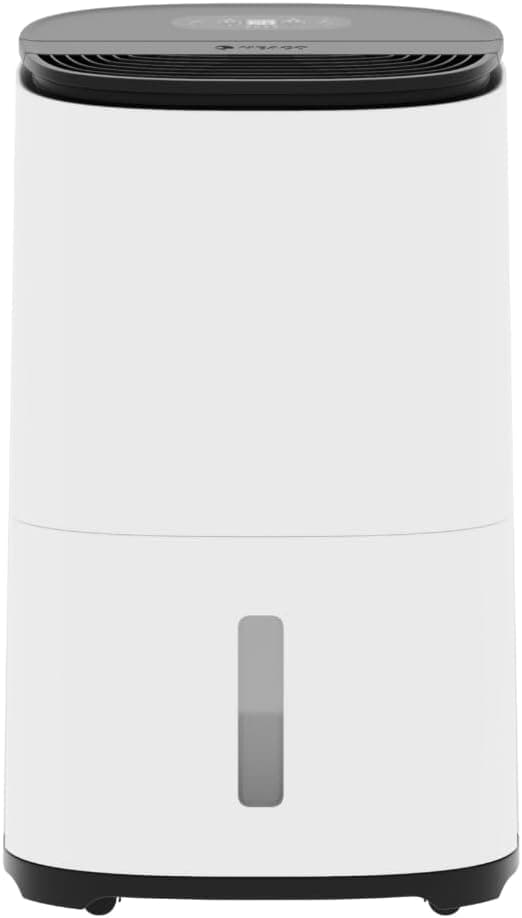
Meaco Arete One 20L Dehumidifier and Medical-Grade H13 HEPA Air Purifier (Low Energy)
Best for: Households drying most laundry indoors
The Arete One 20L is a compressor dehumidifier with a dedicated laundry mode and an H13 HEPA filter. Its rated draw of around 216 W works out at about 7c an hour at typical Irish rates, far less than a conventional tumble dryer, and it tackles window condensation at the same time. In a cold, unheated room a desiccant model may work better; our dehumidifier guide explains the trade-off.
Pros
- Low running cost per hour
- Laundry mode plus humidistat for everyday use
- Doubles as an air purifier
Cons
- Less effective in unheated rooms below about 15°C
- Heavy to carry between floors
Laundry helpers
Links open an Amazon.ie search filtered to items sold & dispatched by Amazon.ie. Availability changes.
- Search Amazon.ie
Heated clothes airer (3-tier with cover)
Check the wattage and that the plug is a standard Irish/UK 3-pin; tiered designs fit more in a small room.
- Search Amazon.ie
Meaco DD8L Zambezi desiccant dehumidifier
Better than a compressor model for drying laundry in a cold room, at a higher running cost.
Electric blankets and draught-proofing
An electric blanket uses a fraction of the power of a room heater and lets you keep the bedroom cooler. Use it to pre-heat the bed for 20–30 minutes, then switch it off. Look for a model with multiple heat settings, an auto-off timer and overheat protection, and machine-washable is a bonus.
Draught-proofing is the cheapest heating upgrade there is. Door-bottom draught excluders, self-adhesive foam or rubber strips around doors and opening windows, letterbox brushes and keyhole covers stop warm air leaking out. Do not block wall vents, trickle vents or the vents that rooms with gas or solid-fuel appliances need for safe combustion; draught-proofing means sealing gaps that should not be there, not ventilation that should.
Bed and draught essentials
Links open an Amazon.ie search filtered to items sold & dispatched by Amazon.ie. Availability changes.
- Search Amazon.ie
Dreamland electric blanket
A well-known brand range with multiple heat settings and timers on most models.
- Search Amazon.ie
Silentnight electric blanket
Widely available single and double underblankets; check for an auto-off timer.
- Search Amazon.ie
Door draught excluder
Twin-sided slide-on designs stay in place when the door opens.
- Search Amazon.ie
Self-adhesive draught strip
Measure the gap first; foam suits small gaps, rubber P- or E-profiles suit larger ones.
Smart plugs and thermostats
A smart thermostat lets you heat the house only when someone is home, schedule rooms differently and turn the heating on from your phone on the way back. A smart plug with energy monitoring is useful for timing a heated airer or dehumidifier to run on a night rate and for seeing exactly what an appliance costs. Check the plug's maximum rated load before using it with anything that heats, and follow the heater manufacturer's instructions; many advise against controlling heaters through timers or smart plugs at all.
Smart controls
Links open an Amazon.ie search filtered to items sold & dispatched by Amazon.ie. Availability changes.
- Search Amazon.ie
TP-Link Tapo P110 smart plug
A compact Wi-Fi smart plug with energy monitoring in the Tapo app.
- Search Amazon.ie
tado smart thermostat
Works with many existing boilers; check compatibility with your system before buying.
More smart-home ideas are in our smart home and streaming guide.
Winter safety checks
Make sure your smoke alarms work and you have a carbon monoxide alarm if you use gas, oil or solid fuel. Test them monthly through the winter.