Fitness band or smartwatch?
A fitness band is a slim strap with a small screen that counts steps, tracks heart rate and sleep, and nudges you to move. A fitness smartwatch adds a bigger screen, usually built-in GPS, contactless payments and more apps. The trade-off is almost always battery life and price: a good band runs for one to three weeks between charges, while a full smartwatch like an Apple Watch needs charging most days. For most people the best tracker is simply the one they will keep wearing, through wet walks, dark evening runs, five-a-side, spin classes and the night-time sleep tracking that only works if it stays on your wrist.
Below are our picks from Amazon.ie stock, a comparison table, and the three things that catch people out: phone compatibility, subscriptions and battery life. Some well-known models, including Fitbit’s Charge and Inspire, Samsung’s Galaxy Fit and Galaxy Watch, and Garmin’s vivoactive and Venu, were not in Amazon.ie’s own stock when we checked (or we could not confirm that they were), so they appear as search links rather than picks. If you are training for a half or full marathon, our running watches guide goes deeper on GPS accuracy and training features.
Our picks
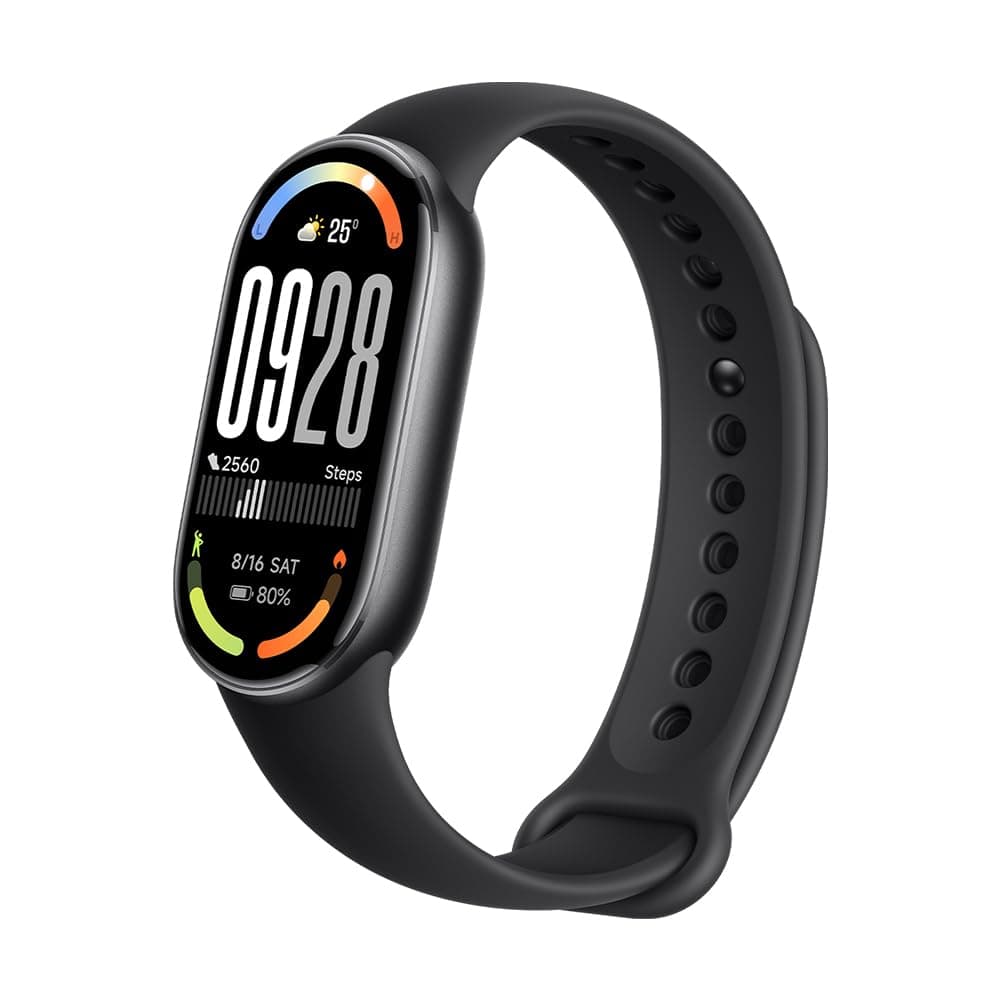
Xiaomi Smart Band 10 Fitness Tracker – 1.72-inch AMOLED, Up to 21-Day Battery, 5ATM
Best for: A first tracker, teenagers, and anyone who wants step and sleep trends without frequent charging.
The Smart Band 10 does the basics very well for little money. Its 1.72-inch AMOLED screen is bright (Xiaomi quotes up to 1500 nits) and easy to read on a grey morning, and Xiaomi rates the battery at up to 21 days of normal use, with a full charge in about an hour. That long battery is what makes the sleep and activity trends useful, because the band rarely comes off. Swim tracking gets an electronic compass and in-water heart rate, the 5ATM rating covers the pool, and the touch controls are designed to cope with damp fingers. It works with Android phones and iPhones through Xiaomi’s free app. What you give up is independence: there is no GPS built in, so for accurate route maps and pace on outdoor runs it relies on your phone, and you can read notifications but not do much with them.
Pros
- Up to 21 days of normal use per charge (Xiaomi figure)
- Bright 1.72-inch AMOLED screen with touch controls designed for damp fingers
- Swim tracking with in-water heart rate and a 5ATM rating
- Works with Android and iPhone, with no subscription
Cons
- No built-in GPS, so bring your phone for accurate run and cycle maps
- Notifications only; it is not a smartwatch
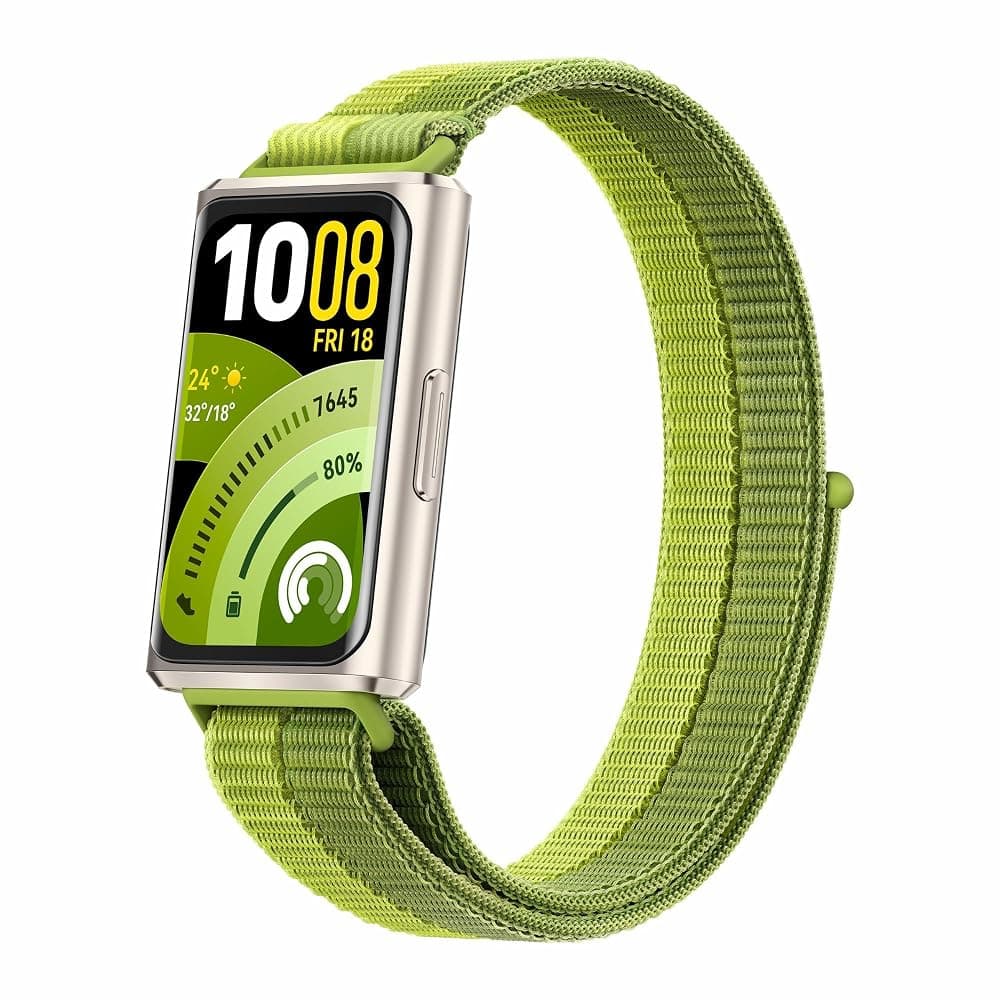
HUAWEI Band 11 Pro Fitness Tracker with Built-in GNSS – 1.62-inch AMOLED, up to 2000 nits (Green)
Best for: Walkers, runners and cyclists who want GPS without paying smartwatch money.
The Band 11 Pro costs a little more than a basic band, and the reason to pay it is built-in GNSS: you can leave the phone at home on a run, a walk on the Wicklow Way or a spin on the bike and still come back with your route, distance and pace. The 1.62-inch AMOLED is bright (up to 2000 nits, according to Huawei), the aluminium case is under 9mm thick, and sleep tracking adds average overnight heart-rate variability alongside heart rate and SpO2. Huawei quotes up to 8 days of regular use, up to 14 days of light use, or about 3 days with the always-on display. The trade-off is the software: set-up runs through the Huawei Health app, which on Android may need to be installed from Huawei’s AppGallery rather than Google Play, and it connects to fewer outside apps than Garmin or Apple.
Pros
- Built-in GNSS for phone-free runs, walks and rides
- Very bright 1.62-inch AMOLED in a slim aluminium case
- Up to 8 days of regular use (Huawei figure)
- Overnight HRV, heart rate and SpO2 tracking
Cons
- Huawei Health app may need installing outside Google Play on Android
- More closed app ecosystem than Garmin or Apple
- Battery drops to about 3 days with the always-on display
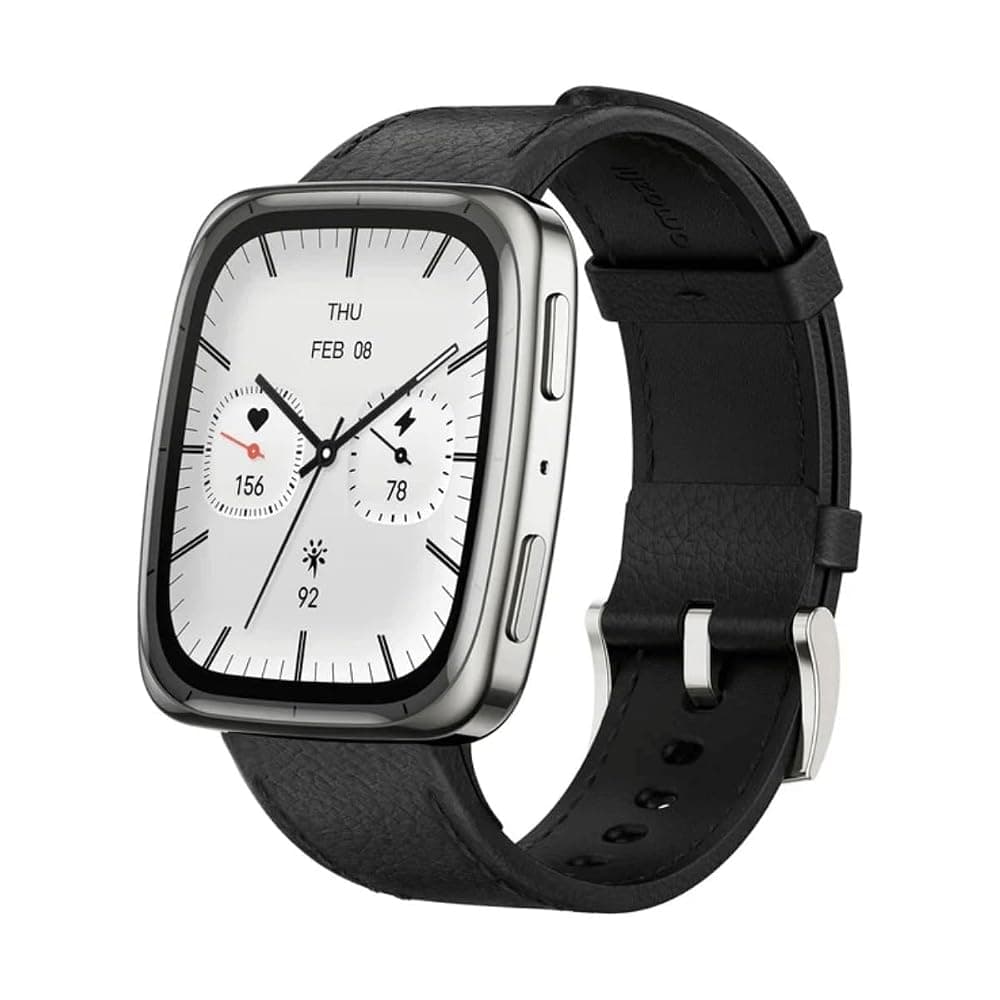
Amazfit Active 2 Square Smartwatch – 1.75-inch AMOLED, Sapphire Glass, GPS & Offline Maps, NFC (Black Leather)
Best for: Anyone with any phone who wants GPS, maps and gym tracking without daily charging.
The Active 2 is the pick if you want a proper GPS smartwatch but do not want to charge it every night or pay a subscription. This is the Square version with NFC, a stainless steel body and sapphire glass over a 1.75-inch AMOLED screen (up to 2000 nits). Amazfit quotes up to 10 days of typical use and up to 21 hours of continuous GPS. Free downloadable maps with turn-by-turn directions are unusual at this level and handy on an unfamiliar trail, Zepp Coach builds adaptive training plans from general fitness up to a marathon, and strength-training and HYROX race modes suit gym-goers. It works with Android and iPhone through the Zepp app. It has far fewer third-party apps than an Apple Watch, and the leather strap on this listing suits the office better than the pool, so check whether a silicone sport strap is in the box or budget for one.
Pros
- Up to 10 days of typical use and 21 hours of GPS (Amazfit figures)
- Free offline maps with turn-by-turn directions
- Sapphire glass and a stainless steel body
- Works with Android and iPhone; core features need no subscription
Cons
- Far fewer third-party apps than Apple Watch or Wear OS
- The leather strap on this listing is not ideal for swimming or sweaty sessions
- Contactless payments depend on your bank or card being supported
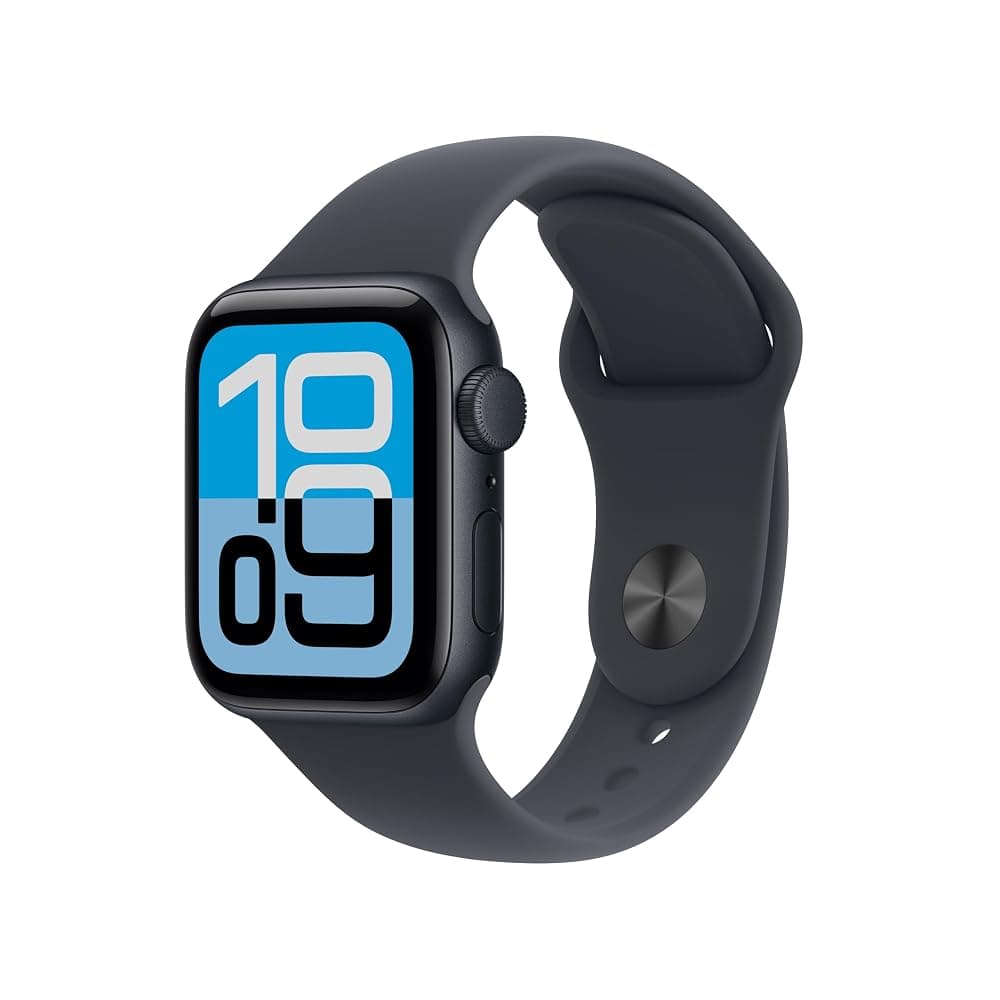
Apple Watch SE 3 (GPS, 40mm) – Midnight Aluminium Case with Midnight Sport Band, M/L
Best for: iPhone owners, older parents, and anyone who wants safety features as much as step counts.
If you have an iPhone and want one device for notifications, Apple Pay and fitness, the SE 3 is the sensible way in. It now has an always-on display, Apple’s S10 chip, built-in GPS and water resistance to 50m. Health tracking covers a daily sleep score, wrist temperature for the Vitals app, cycle tracking, and alerts for unusually high or low heart rate or an irregular rhythm. Fall Detection can contact emergency services and your emergency contacts after a hard fall, which is real peace of mind for an older parent or anyone walking or cycling alone, and Crash Detection does the same after a serious car crash. Apple quotes up to 18 hours of battery (32 hours in Low Power Mode), so expect to charge most days. It skips the ECG app and blood oxygen readings of the Series models, and it does not work with Android phones.
Pros
- Always-on display, sleep score and temperature sensing
- Fall Detection, Crash Detection, Emergency SOS and Check In
- The best app support and iPhone integration of any watch here
- Apple Fitness+ is optional; all tracking works without it
Cons
- iPhone only
- Up to 18 hours of battery, so it needs charging most days
- No ECG app or blood oxygen readings
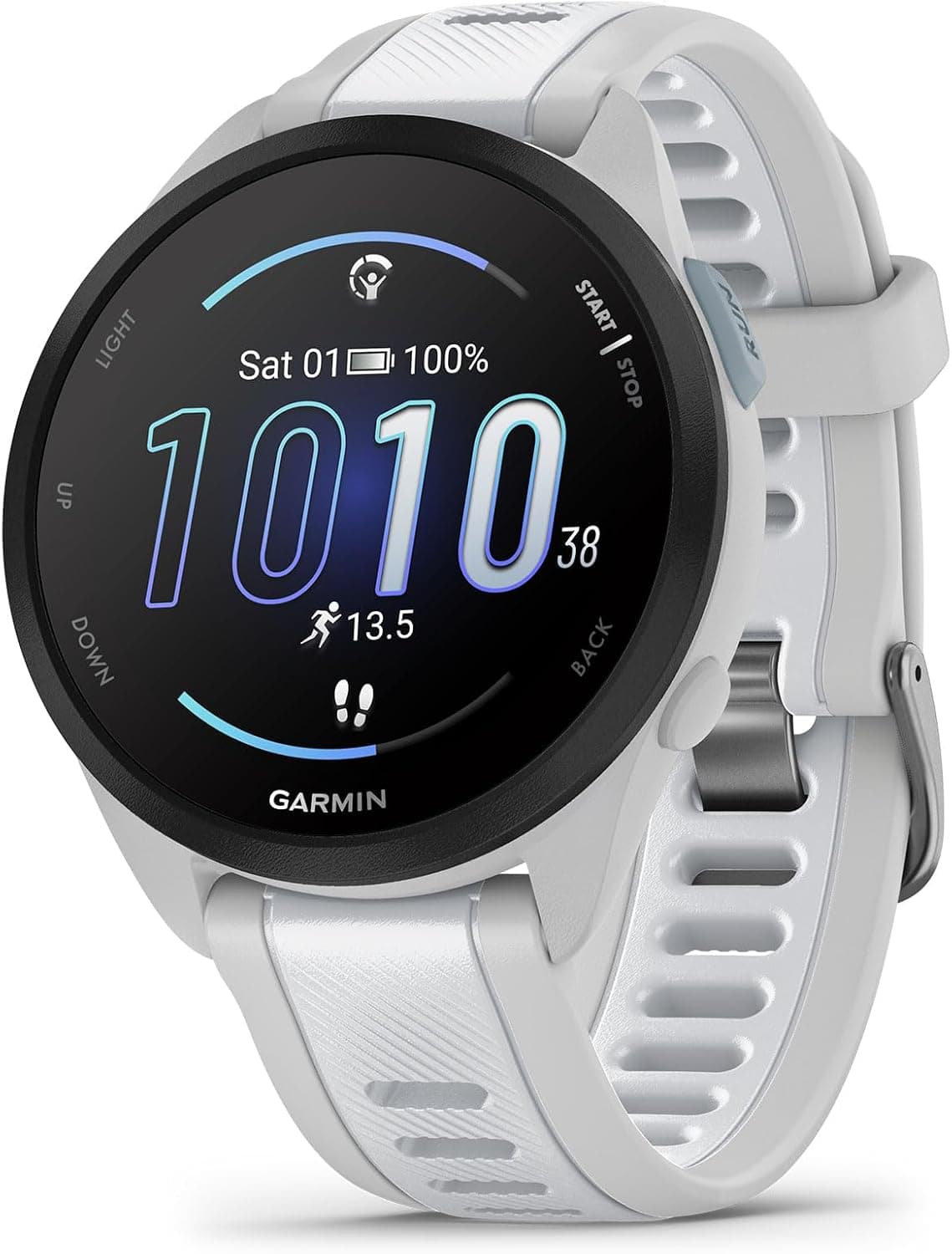
Garmin Forerunner 165 GPS Running Smartwatch – 43mm AMOLED Touchscreen (Whitestone)
Best for: Anyone who runs, cycles or walks a lot and wants a Garmin that tracks everything else too.
Amazon.ie price as of 26 Oct 2026, 06:46. May have changed.
We could not find Garmin’s vivoactive or Venu watches in Amazon.ie’s own stock when we checked, but the Forerunner 165 makes a very good everyday fitness watch as well as a running watch. It has built-in GPS, a bright AMOLED touchscreen backed by physical buttons that work in the rain, and Garmin quotes up to 11 days in smartwatch mode. The morning report sums up your sleep, HRV status and training outlook, daily suggested workouts adapt to how well you have recovered, and incident detection can alert a contact during outdoor activities when paired with your phone. Garmin Connect works with Android and iPhone and the core features are free. It looks sportier than a lifestyle watch, has fewer smartwatch apps than an Apple Watch, and this standard version has no music storage.
Pros
- Physical buttons plus an AMOLED touchscreen
- Up to 11 days in smartwatch mode and 19 hours of GPS (Garmin figures)
- Adaptive suggested workouts and Garmin Coach plans
- Works with Android and iPhone, with no subscription needed
Cons
- Sportier look than a lifestyle smartwatch
- No music storage on this version
Fitbit, Garmin and Samsung models to check
Links open an Amazon.ie search filtered to items sold & dispatched by Amazon.ie. Availability changes.
- Search Amazon.ie
Fitbit Charge 6
A slim band with built-in GPS, Google Wallet and YouTube Music controls. Several features need a Fitbit Premium subscription and set-up needs a Google account. Amazon.ie’s own stock comes and goes.
- Search Amazon.ie
Fitbit Inspire 3
Fitbit’s simplest band, with a colour screen and long battery life, but no built-in GPS.
- Search Amazon.ie
Garmin vivosmart 5
A slim Garmin band with a physical button and free Garmin Connect app; it uses your phone for GPS.
- Search Amazon.ie
Garmin vivoactive 6
Garmin’s everyday fitness smartwatch, with built-in GPS, an AMOLED screen and battery life measured in days rather than hours.
- Search Amazon.ie
Garmin Venu
Garmin’s more lifestyle-styled AMOLED smartwatches, with built-in GPS and the same free Garmin Connect app; compare models, as features vary by generation.
- Search Amazon.ie
Samsung Galaxy Fit3
A large-screen band with long battery life. It works with Android phones only.
- Search Amazon.ie
Samsung Galaxy Watch8
A Wear OS smartwatch with Google apps, for Android only; some health features need a Samsung Galaxy phone, and plan to charge it every day or two.
The Dublin Drop — Friday Deals
Price drops on Amazon.ie stock, once a week. No customs fees, no spam.
Free. No spam. Unsubscribe anytime. We only send verified domestic deals.
Comparison table
| Xiaomi Smart Band 10 | Huawei Band 11 Pro | Amazfit Active 2 Square | Apple Watch SE 3 (GPS) | Garmin Forerunner 165 | |
|---|---|---|---|---|---|
| Type | Fitness band | Fitness band | Smartwatch | Smartwatch | GPS running watch |
| Screen | 1.72-inch AMOLED, up to 1500 nits | 1.62-inch AMOLED, up to 2000 nits | 1.75-inch AMOLED, up to 2000 nits, sapphire glass | Always-on Retina, 40mm case | AMOLED touchscreen plus buttons, 43mm case |
| Built-in GPS | No (uses your phone) | Yes | Yes, five satellite systems | Yes | Yes |
| Battery (maker’s figure) | Up to 21 days | Up to 8 days regular use (14 light) | Up to 10 days typical, 21 hours GPS | Up to 18 hours (32 in Low Power Mode) | Up to 11 days, 19 hours GPS |
| Works with | Android and iPhone | Android and iPhone (Huawei Health app) | Android and iPhone | iPhone only | Android and iPhone |
| Subscription needed? | No | No | No (optional extras) | No (Fitness+ optional) | No (Connect+ optional) |
| Rough budget | Under €50 | Under €100 | €100–€200 | €250–€300 | €200–€250 |
| Best for | A first tracker | GPS on a budget | Any phone, long battery | iPhone owners | Runners who want one watch |
iPhone or Android? Check compatibility first
This is the most common mistake with fitness tracker gifts. Some of the best-known watches only work with one kind of phone, and a few hide their best features behind a particular brand of phone. Check what phone the person uses before you buy.
| Brand | iPhone | Android | Worth knowing |
|---|---|---|---|
| Apple Watch | Yes | No | Needs an iPhone to set up and use |
| Samsung Galaxy Watch and Galaxy Fit | No | Yes | Some health features, such as ECG, need a Samsung Galaxy phone |
| Google Pixel Watch | No | Yes | Fitbit health tracking is built in |
| Fitbit | Yes | Yes | Needs a Google account |
| Garmin | Yes | Yes | Replying to texts from the watch is Android only |
| Amazfit, Xiaomi | Yes | Yes | Free apps (Zepp and Xiaomi’s own app) |
| Huawei | Yes | Yes | Huawei Health app; on Android it may come from AppGallery rather than Google Play |
Subscriptions: what is free and what costs extra
Most trackers do their main job without a subscription, but a few brands keep some of their most-advertised features for paying members. Over two or three years a monthly fee can add up to more than the price of a budget band, so it is worth knowing before you buy. Subscription prices change, so check the current cost on the brand’s own site.
| Brand | Subscription | What works without it |
|---|---|---|
| Fitbit | Fitbit Premium (optional, monthly or yearly; many new devices include a trial) | Steps, heart rate, basic sleep tracking and exercise; Daily Readiness and deeper sleep insights need Premium |
| Garmin | Garmin Connect+ (optional, launched 2025) | Garmin says the features that were already free stay free, including training and recovery tools |
| Apple | Apple Fitness+ (optional guided workouts and classes) | All the tracking on the watch |
| Samsung | None required | Samsung Health tracking |
| Amazfit | Optional paid extras in the Zepp app | Tracking, Zepp Coach training plans and offline maps |
| Xiaomi, Huawei | Not needed for core features | Tracking, sleep and workouts |
| WHOOP and similar screenless bands | Membership required | The band is sold as a membership, so you pay for as long as you use it |
Battery life and charging
- Treat the battery figure as a best case. Manufacturers quote battery life with typical settings. GPS workouts, the always-on display, frequent notifications and cold winter mornings all shorten it. Huawei, for example, quotes up to 8 days of regular use for the Band 11 Pro but about 3 days with the always-on display switched on.
- Daily charging changes how you use it. An Apple Watch at up to 18 hours has to go on the charger most days, so many owners charge it while they shower and get ready for work and wear it to bed. A band that lasts one to three weeks rarely misses a night of sleep tracking.
- No plug in the box. Trackers and watches come with a USB cable or a magnetic charging dock, not a plug. A decent USB phone charger will do, but check whether the cable ends in USB-A or USB-C (Apple’s watch cable is USB-C) so it fits the plug you have. Because they are battery powered, plug type is not a concern. Our chargers and power banks guide covers good options.
- Keep track of the dock. Most chargers are specific to the brand and often the model. A spare for work or travel saves a dead watch halfway through a holiday.
How accurate are fitness trackers?
Treat a tracker as a good guide to trends, not a precise measurement. Step counts and resting heart rate are generally reliable enough to show whether you are more or less active than last month. Wrist heart rate is less reliable when it changes quickly, as in intervals, circuits, spin or a five-a-side sprint, because the strap moves and the wrist flexes. Calorie figures and sleep stages are estimates based on movement and heart rate. Health alerts such as irregular-rhythm notifications can be useful prompts, but none of these devices replaces a visit to your GP.
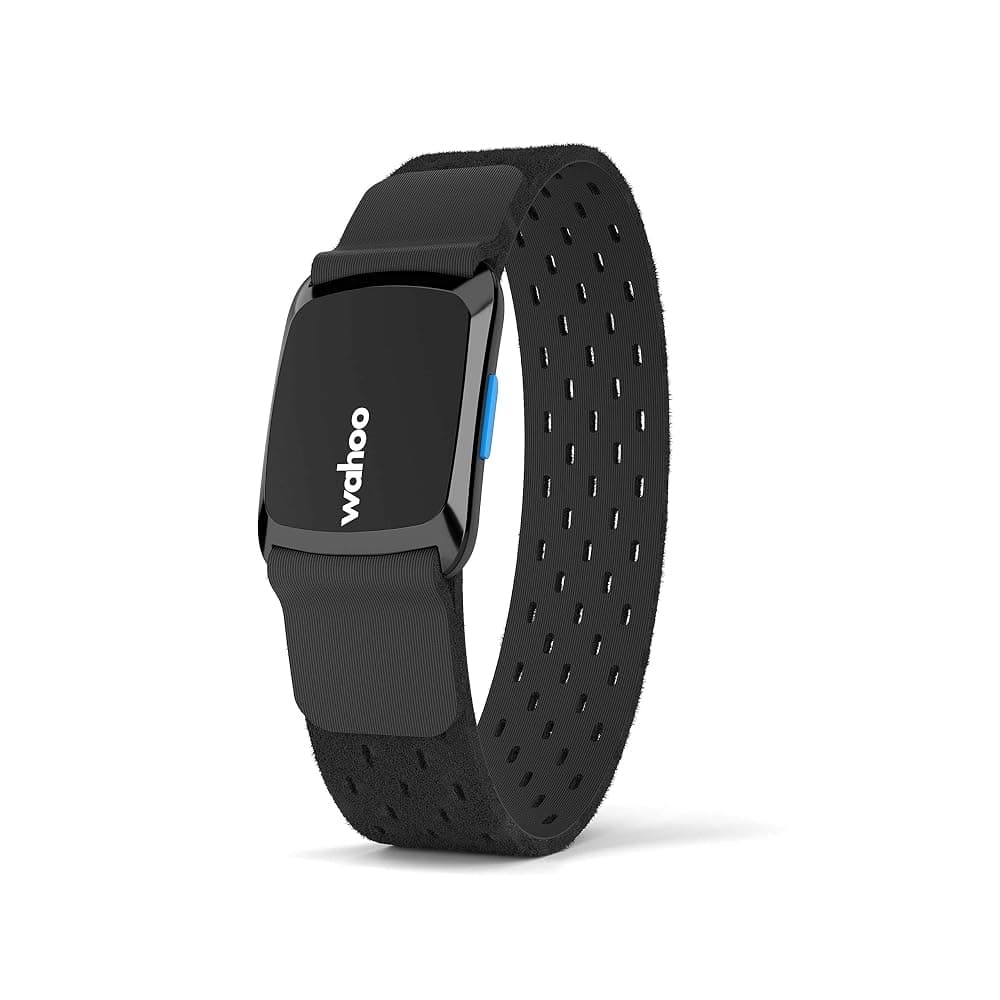
Wahoo TICKR FIT Optical Heart Rate Armband – Bluetooth & ANT+, USB Rechargeable
Best for: Spin, HIIT and gym classes, and anyone training by heart-rate zones.
If you train by heart rate in classes or on the bike, an arm-worn sensor is a simple upgrade. The TICKR FIT sits on your forearm under a stretchy strap (small and large straps are in the box), where it moves less than a wrist tracker, and many people find it more comfortable than a chest strap. It broadcasts over Bluetooth and ANT+, so it can feed live heart rate to a GPS watch, a phone app or a bike computer, and Wahoo quotes up to 30 hours per USB charge. It is a sensor, not a tracker, so check that your watch or app accepts an external heart-rate sensor first.
Pros
- Sits more securely than a wrist tracker during intervals and classes
- Bluetooth and ANT+ for watches, apps and bike computers
- Up to 30 hours per charge (Wahoo figure)
Cons
- Needs a watch, phone or bike computer to record anything
- Pointless if you only want daily step and sleep trends
What to look for when buying
- Phone first. Check the compatibility table above before anything else, especially if it is a gift.
- Band or watch. A band is lighter, cheaper and better for sleep tracking. A watch is better for maps, payments and replying to messages. If you mainly want to walk more and sleep better, a band is plenty.
- Built-in or phone GPS. Built-in GPS lets you leave the phone at home on runs, rides and walks. If you always carry your phone anyway, a band that uses the phone’s GPS will do.
- Water resistance. 5ATM or 50m ratings cover swimming in a pool or the sea. Rinse the tracker in fresh water after a sea swim, and check the manual before wearing one in a sauna, steam room or hot shower.
- Screens and buttons in the rain. Touchscreens can misbehave with wet fingers or gloves. If you run or cycle through Irish winters, physical buttons, as on the Garmin Forerunner range, are easier to use.
- Fit. Check the strap size against the wrist. Apple sells the SE 3 in two case sizes with S/M and M/L straps as separate listings, and for a band, check the wrist range on the listing if the wearer has a very small or very large wrist.
- Contactless payments. Apple Pay works with most Irish banks. Other watch wallets support fewer banks and cards, so check yours on the manufacturer’s site before you rely on it.
- Gifting. Trackers are popular Christmas presents and January fresh-start buys. Order early for Christmas and keep the box; our Amazon.ie returns guide explains the holiday returns window.
Everything on this page is limited to stock sold and dispatched by Amazon.ie, so there are no import charges at the door and you get EU consumer rights on returns; here is why we only list Amazon.ie stock. For more, see our home gym equipment guide, wireless earbuds for workouts, the Sports & Fitness guides and Tech & Gadgets guides, or browse the Sports & Outdoors category.