Which power bank or charger do you actually need?
Most people need two things: a power bank sized to their day, and one good USB-C wall charger with an Irish 3-pin plug to replace the drawer of old bricks. For a phone on the commute, at a match or on a night out, 10,000mAh is the sweet spot. For weekends away, festivals or a family sharing one bank, go to 20,000mAh. If you want to keep a laptop going on the train to Cork or in an airport, you need a bank that can deliver at least 45W, and ideally 65W or more, over USB-C, and those are heavier. Magnetic banks are the most convenient option for MagSafe iPhones, but they hold less and charge less efficiently.
There is a good Irish reason to buy these from domestic stock. International postal rules allow lithium batteries only when they are fitted in the device they power, and a power bank is a battery on its own, so many overseas sellers cannot post one to Ireland at all and the rest use slower courier routes. Orders from the UK can also bring customs charges after Brexit (see our customs charges explainer). Everything in our catalog below is sold and dispatched by Amazon.ie, so it ships from domestic stock with EU consumer rights, and the wall chargers come with UK/Irish 3-pin plugs. Here is why we only list Amazon.ie stock.
Our picks: power banks
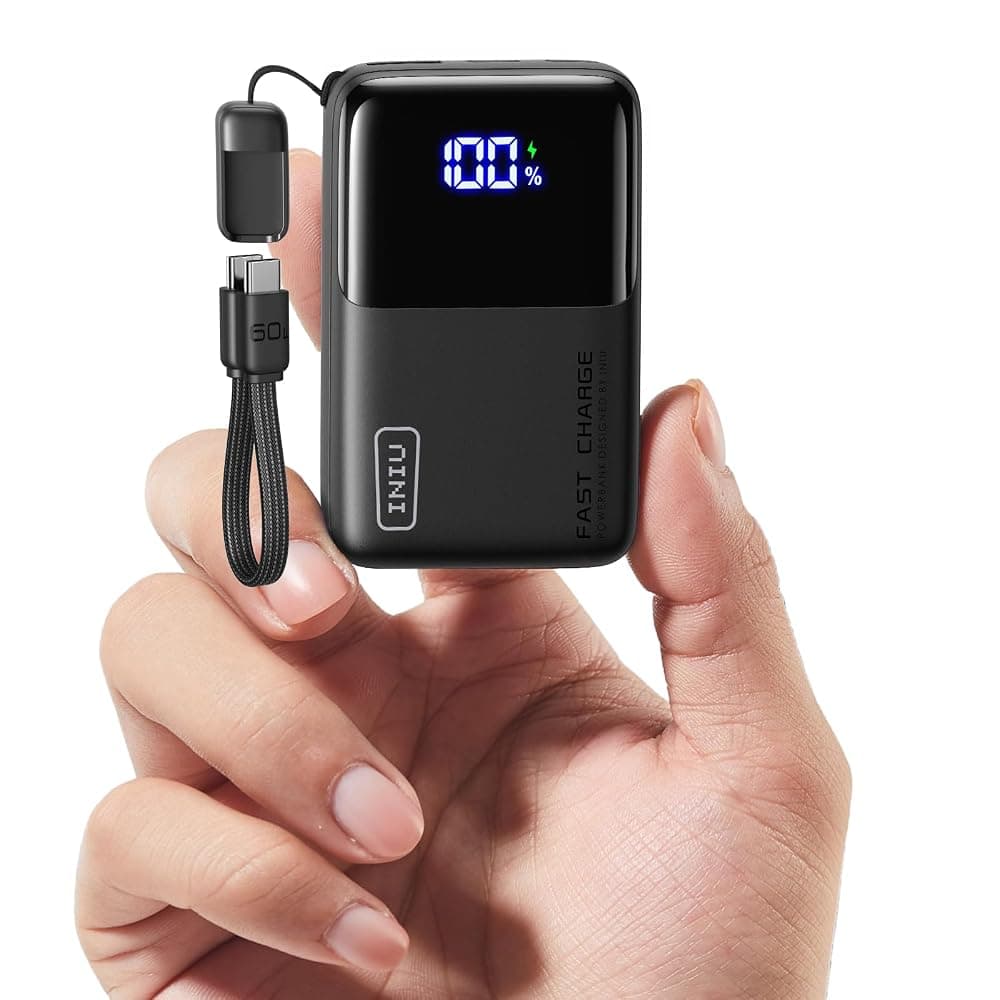
INIU Ultra Mini 10,000mAh 45W Power Bank – USB-C PD, 3 Ports, Detachable USB-C Lanyard Cable
Best for: Commuters, students, match days and nights out.
INIU’s Ultra Mini is the size most people will actually carry. It fits 10,000mAh into a 160g body that INIU says is far smaller than a standard 10,000mAh bank, and its 45W top output supports USB PD for iPhones, Quick Charge and Samsung Super Fast Charging. INIU says it charges an iPhone 16 about twice. There are two USB-C ports and a USB-A port, and the USB-C cable doubles as a lanyard and detaches. It will not fully recharge a laptop, but 45W is enough to give a MacBook Air an emergency top-up (INIU quotes 42% in 25 minutes). INIU backs it with a three-year warranty.
Pros
- Pocketable at 160g for a 10,000mAh bank
- 45W output with PD, Quick Charge and Samsung Super Fast Charging
- Three outputs plus a detachable USB-C lanyard cable
- Three-year INIU warranty
Cons
- Not enough capacity to fully recharge a laptop
- A popular model, so Amazon.ie’s own stock can sell out; check the seller is Amazon.ie at checkout
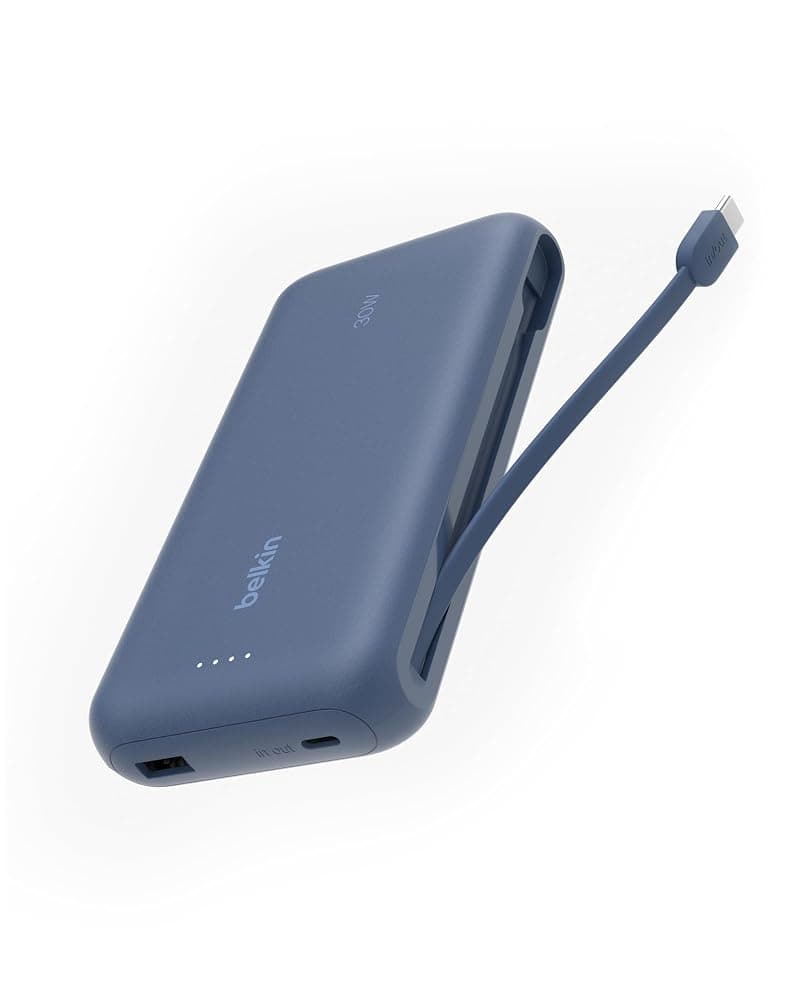
Belkin BoostCharge 20,000mAh Power Bank with Integrated USB-C Cable – 30W, 3 Devices (Blue, BPB024)
Best for: Weekends away, festivals, families and power cuts.
Belkin’s BoostCharge 20K is the bank to bring on a long weekend, to Electric Picnic or on a family day out where several phones need a top-up. Its USB-C cable is built in, which fixes the most common power bank failure: bringing the bank and forgetting the cable. A second USB-C port and a USB-A port let three devices charge at once, although the 30W output is shared between them. Belkin says it takes an iPhone 16 Pro from 0 to 50% in about 25 minutes. Pass-through charging means one wall plug can recharge the bank and a phone overnight, and it is a handy thing to have charged in the press when a winter storm knocks the power out. At 395g it is a bag item, not a pocket one.
Pros
- Built-in USB-C cable, so you are never without one
- Charges three devices at once
- Pass-through charging and an LED battery indicator
Cons
- 30W is shared across all three outputs
- Too little power for most laptops beyond a MacBook Air
- Heavier than a 10,000mAh bank at 395g
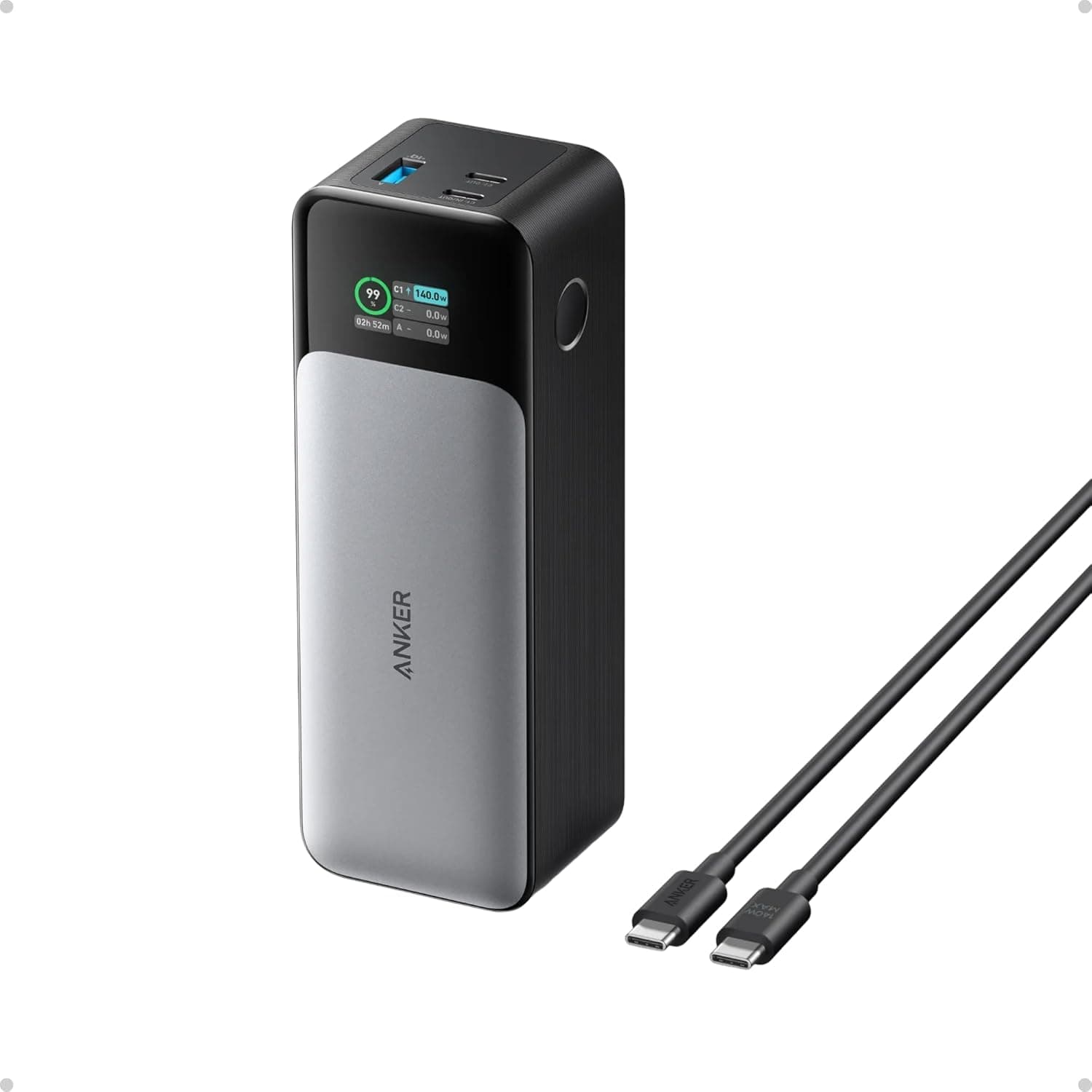
Anker 737 Power Bank (PowerCore 24K) 140W 3-Port Portable Charger with Smart Digital Display
Best for: Laptop users, frequent flyers and hybrid workers. See our [home office tech guide](/guides/essential-home-office-tech-ireland).
If you work from trains, cafés and departure gates, this is the bank that genuinely replaces a wall socket. The Anker 737 holds 24,000mAh and puts out up to 140W over USB-C Power Delivery 3.1, more than most USB-C laptops can draw, so a MacBook or Windows ultrabook charges at or close to its normal rate. Its colour display shows the wattage going in and out and the time remaining, which takes the guesswork out of charging. At 86.4Wh it sits under the 100Wh limit most airlines apply to hand luggage without approval. To get more than 100W from it you need a USB-C cable rated for 140W or 240W.
Pros
- Up to 140W over USB-C, more than most laptops can draw
- Display shows input and output wattage in real time
- 86.4Wh, under the usual 100Wh cabin limit
Cons
- Heavy and bulky compared with phone-sized banks
- Overkill if you only ever charge a phone
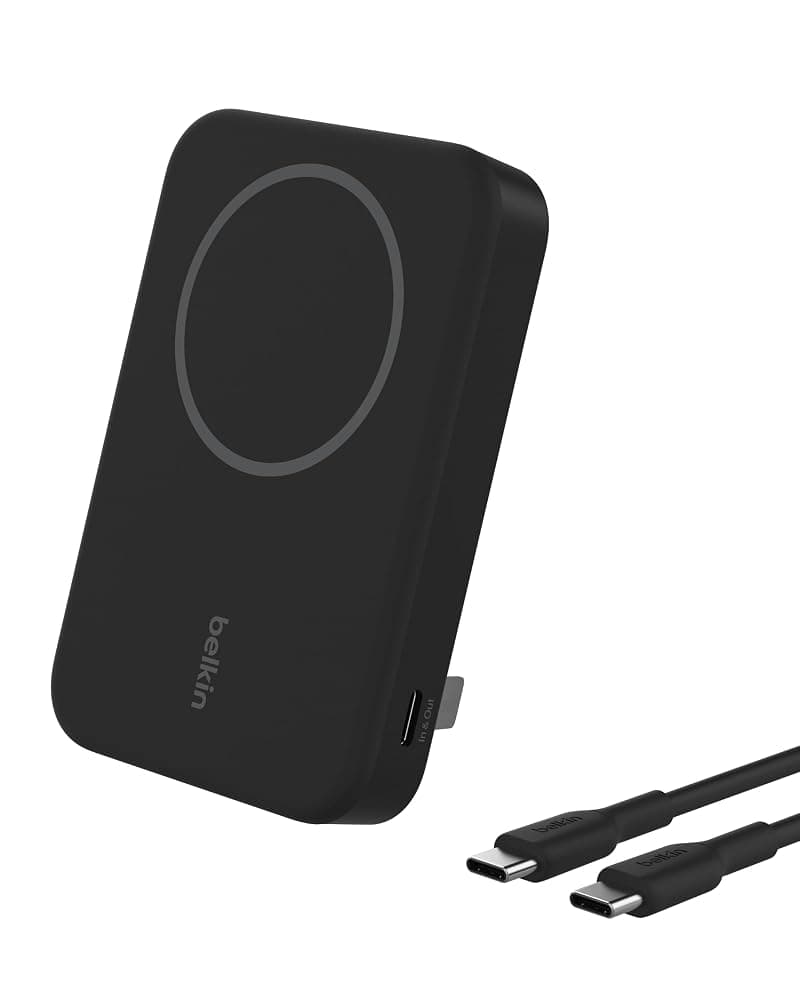
Belkin BoostCharge Pro Qi2 15W Magnetic Power Bank 8,000mAh with Pop-up Kickstand (MagSafe Compatible, Black)
Best for: MagSafe iPhones (iPhone 12 and newer; the iPhone 16e has no MagSafe magnets) and Android phones with Qi2 magnets built in.
For MagSafe iPhone owners, a magnetic bank is the most convenient top-up: it snaps onto the back and charges with no cable hanging out of your pocket. Belkin’s BoostCharge Pro is WPC Qi2 certified, so the magnets align properly and it charges at up to 15W, faster than older generic magnetic banks that were limited to 7.5W on an iPhone. The pop-up kickstand is useful for watching something on the bus. A USB-C port adds up to 20W for a wired top-up or a second device. The trade-off is that 8,000mAh holds less than a wired 10,000mAh bank, and wireless charging loses more energy as heat. Newer Qi2.2 accessories can charge recent iPhones faster wirelessly.
Pros
- Certified Qi2 magnetic charging at up to 15W
- Built-in kickstand
- USB-C port for a second device or wired charging
Cons
- Fewer full charges than a wired bank of similar size
- Needs MagSafe, Qi2 magnets or a magnetic case to stay put
Other power banks worth a look
Links open an Amazon.ie search filtered to items sold & dispatched by Amazon.ie. Availability changes.
- Search Amazon.ie
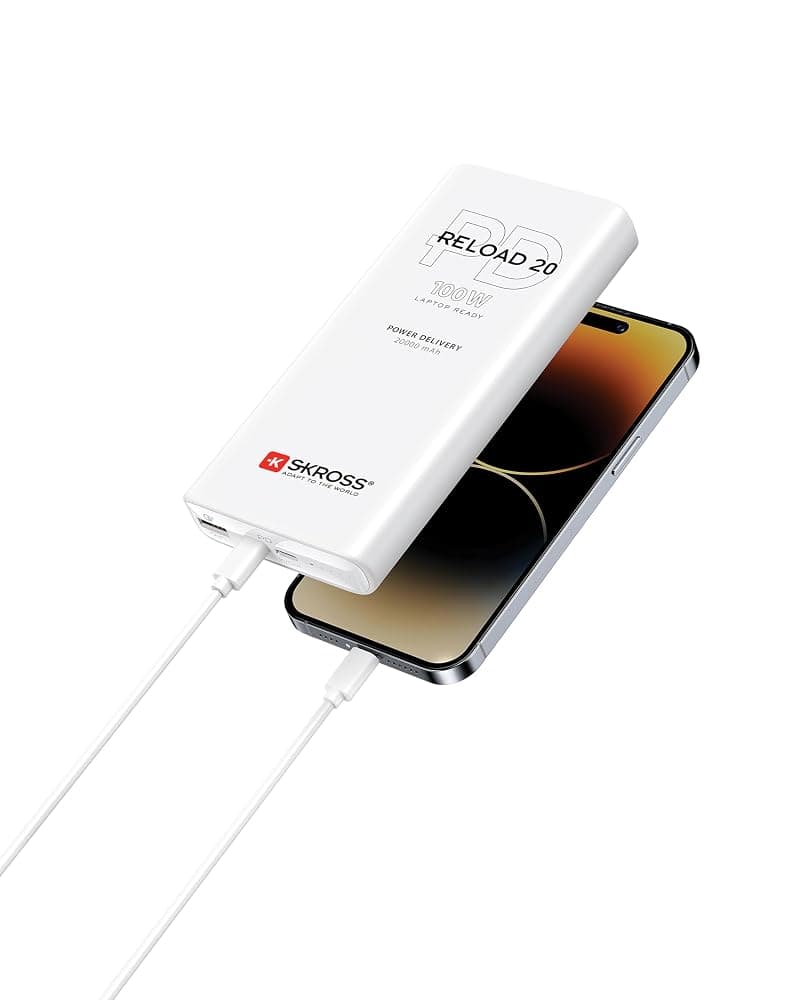
SKROSS Reload 20 100W PD
A 20,000mAh bank from Swiss travel brand SKROSS with up to 100W USB-C PD output, three ports and a short USB-C cable in the box. Enough for most USB-C laptops, with a little less capacity than the Anker 737.
- Search Amazon.ie
Intenso F20000
A plain 20,000mAh bank with 20W USB-C PD and a display, from German brand Intenso. Fine for phones; too slow for tablets in a hurry or laptops.
The Dublin Drop — Friday Deals
Price drops on Amazon.ie stock, once a week. No customs fees, no spam.
Free. No spam. Unsubscribe anytime. We only send verified domestic deals.
Our picks: wall chargers and cables
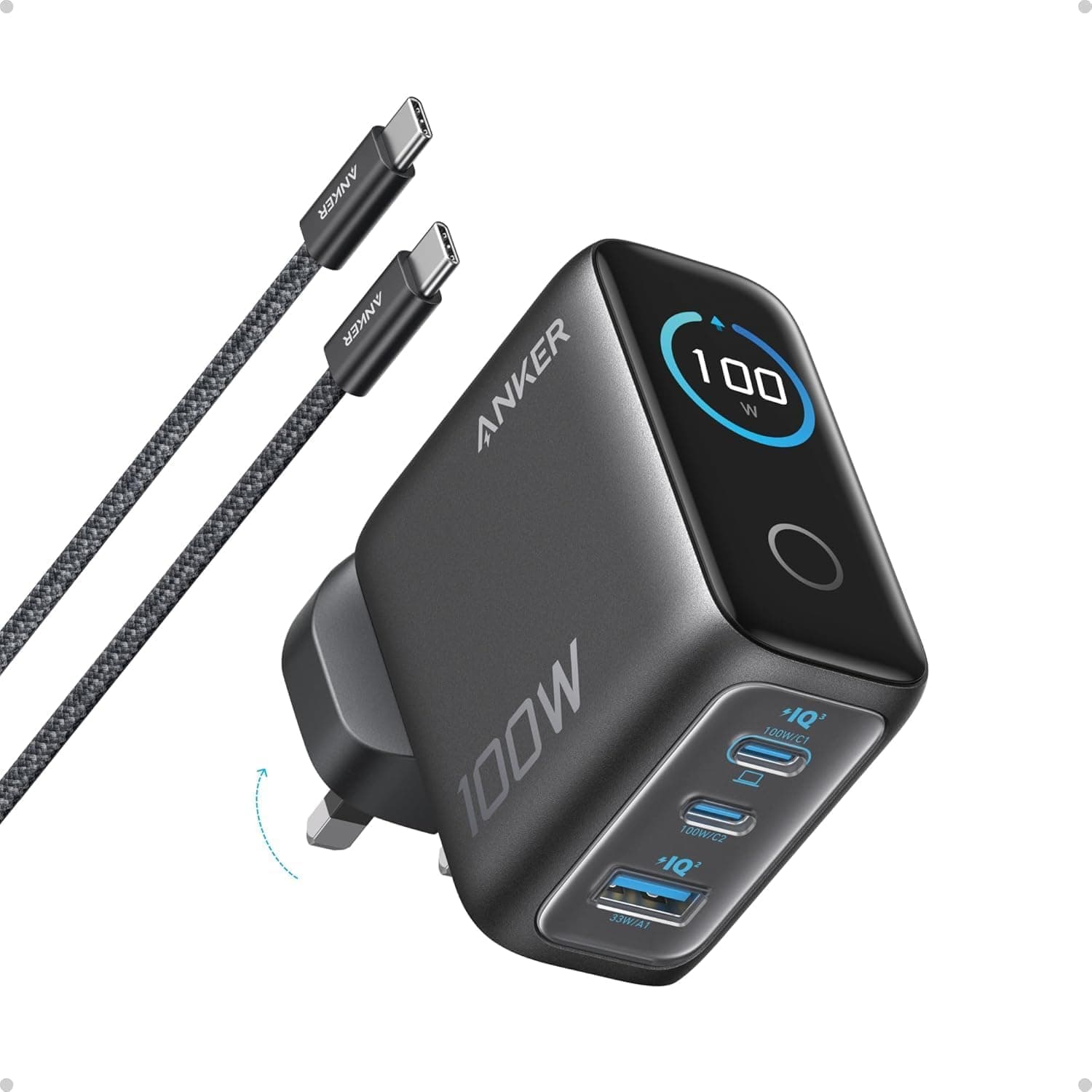
Anker Prime 100W GaN Wall Charger (3-Port Fast Charger for MacBook Pro, iPad, iPhone – Irish 3-Pin)
Best for: Home offices, students and bedside charging for the whole household.
Most homes end up with a separate charger for the laptop, phone, tablet and earbuds, all fighting over one double socket. The Anker Prime 100W replaces them with one compact GaN plug: two USB-C ports and a USB-A port, with an Irish 3-pin plug built in, so there is no adaptor or tip to lose. It can fast-charge a typical 45W–65W ultrabook while a phone charges alongside it. Remember that the 100W is shared, so three power-hungry devices at once each get less.
Pros
- Replaces several chargers with one plug
- Enough power for most USB-C laptops plus a phone
- Built-in Irish 3-pin plug, with no adaptor needed
Cons
- 100W is shared when several ports are in use
- Not enough for gaming laptops that need more than 100W
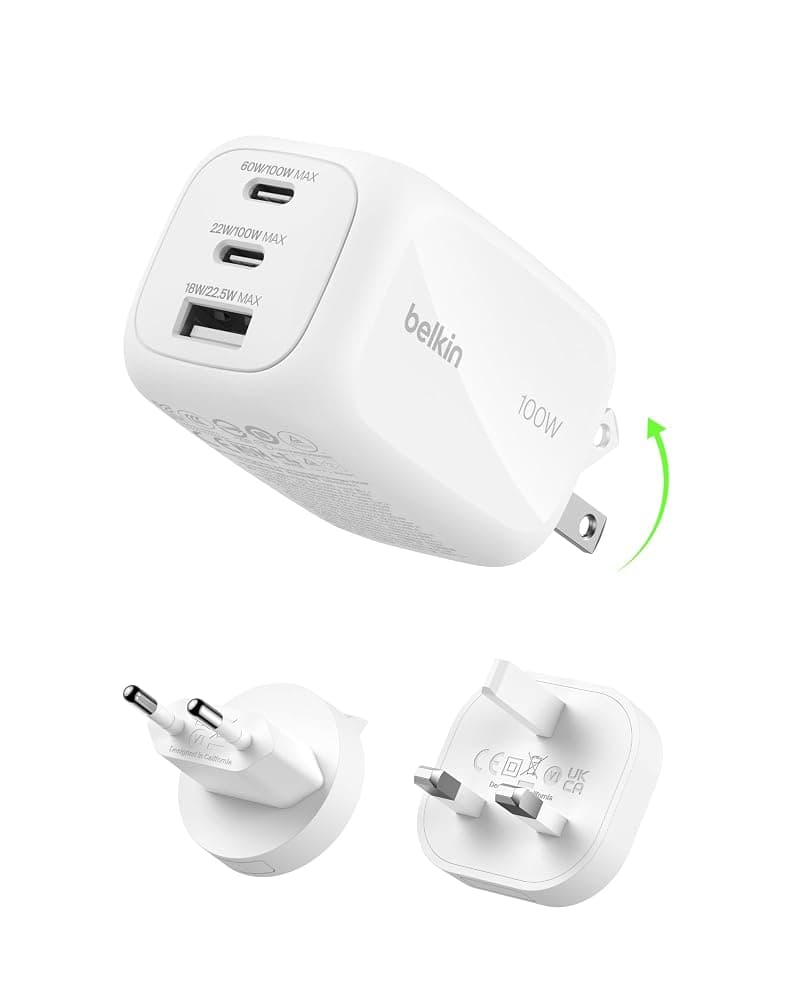
Belkin 100W 3-Port GaN Wall Charger (2 x USB-C, 1 x USB-A) with Interchangeable UK, EU and US Plug Tips – White
Best for: Holidays, work trips and anyone who flies out of Dublin, Cork or Shannon regularly.
This Belkin has the same 2 x USB-C and 1 x USB-A layout and 100W total as the Anker, but it comes with interchangeable plug tips: UK/Irish 3-pin for home, European for Spain, Portugal or France, and US. That means one charger and no travel adaptor in the bag. A single USB-C port can deliver the full 100W to a laptop, and PPS support suits Samsung phones that use Super Fast Charging. Belkin backs it with a two-year limited warranty plus its Connected Equipment Warranty. For a charger that never leaves the house, the Anker’s built-in plug means there are no tips to lose.
Pros
- UK, EU and US plug tips in the box
- Up to 100W from one USB-C port
- PPS for Samsung Super Fast Charging
Cons
- Plug tips are one more small part to keep track of
- 100W is shared across three devices
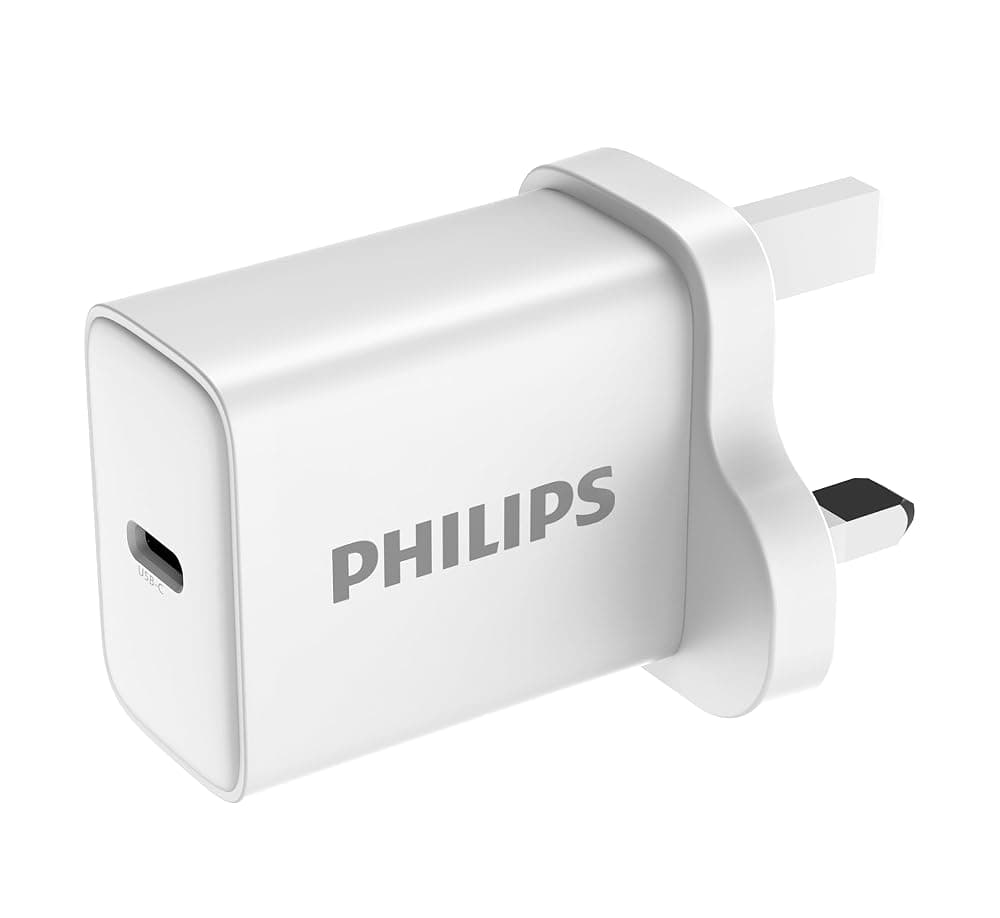
Philips 30W GaN USB-C Wall Charger with UK/Irish 3-Pin Plug – USB PD Fast Charging (DLP5312CW, White)
Best for: A new phone, a bedside spare or a college bag.
New phones no longer come with a charger in the box, and this is the low-cost fix. It is a single-port 30W USB-C charger with a UK/Irish 3-pin plug, which charges any current iPhone quickly along with earbuds, e-readers and a 10,000mAh power bank. Philips does not list PPS support, so a Samsung Galaxy will charge at its standard fast rate rather than Super Fast Charging. There is no cable in the box.
Pros
- Irish 3-pin plug, compact GaN design
- 30W USB-C PD is plenty for phones
- Inexpensive enough to buy two
Cons
- One port only
- No cable included
- No PPS listed for Samsung Super Fast Charging
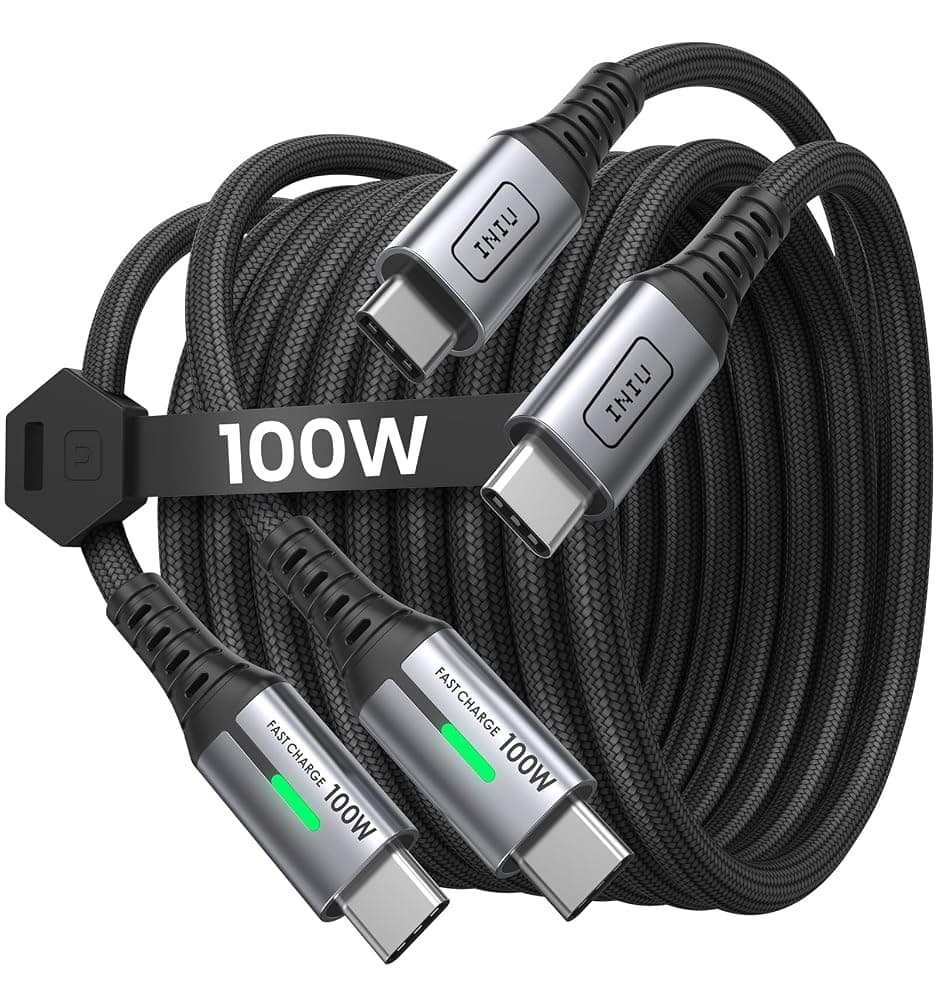
INIU 100W USB-C to USB-C Cable, 2m (2-Pack) – Nylon Braided Fast Charging Cable
Best for: Replacing short or frayed cables at home, in the car and at work.
Cables fail before chargers do, and a 2m length reaches from the socket to the bed or sofa where a phone’s short cable does not. This INIU pack gives you two braided USB-C to USB-C cables rated for up to 100W, so they can carry a 100W charger’s full output to a laptop as well as charging phones and tablets. INIU does not headline a data speed, so for an external SSD or a monitor, buy a cable that states USB 3 or USB4 speeds.
Pros
- Two 2m cables in the pack
- Rated for up to 100W
- Braided outer
Cons
- No stated data speed, so not one for SSDs or monitors
- Not enough for 140W charging from the Anker 737
Other chargers and cables to consider
Links open an Amazon.ie search filtered to items sold & dispatched by Amazon.ie. Availability changes.
- Search Amazon.ie
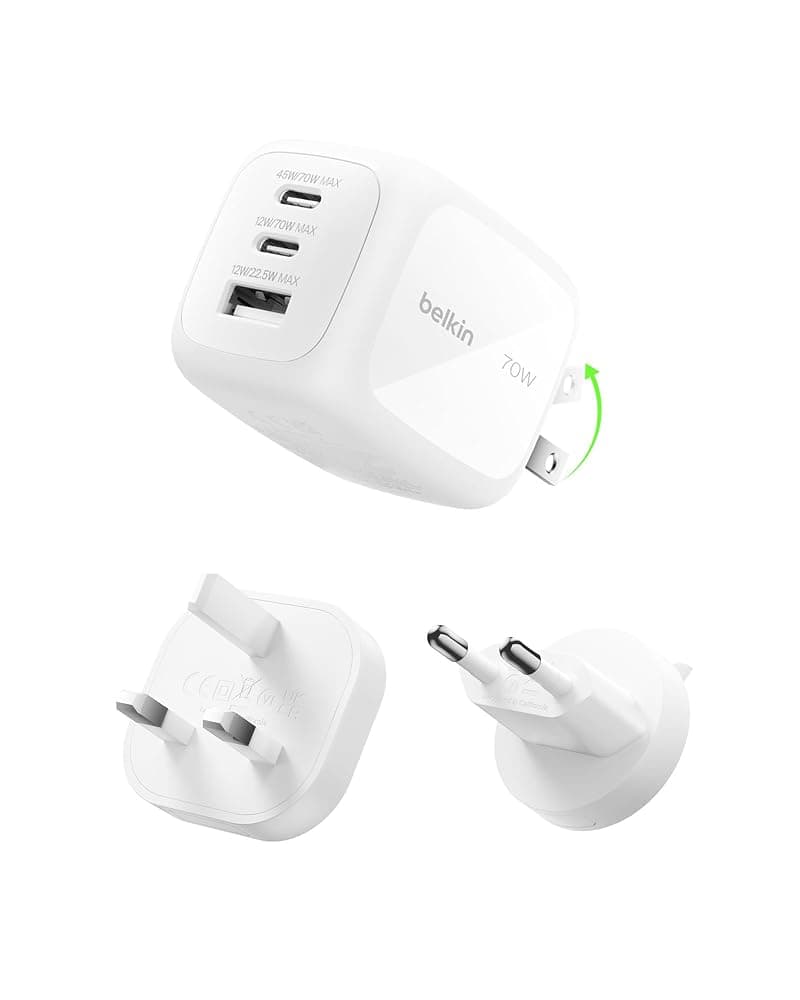
Belkin 3-Port 70W GaN charger (UK and US tips)
A cheaper multi-port option with 2 x USB-C and 1 x USB-A. Fine for phones, tablets and 45W–65W laptops; it comes with UK and US tips but no European one.
- Search Amazon.ie
Apple 20W USB-C Power Adapter
Apple’s own single-port charger with a UK/Irish 3-pin plug. A safe choice for an iPhone or iPad if you prefer to stick with Apple.
- Search Amazon.ie
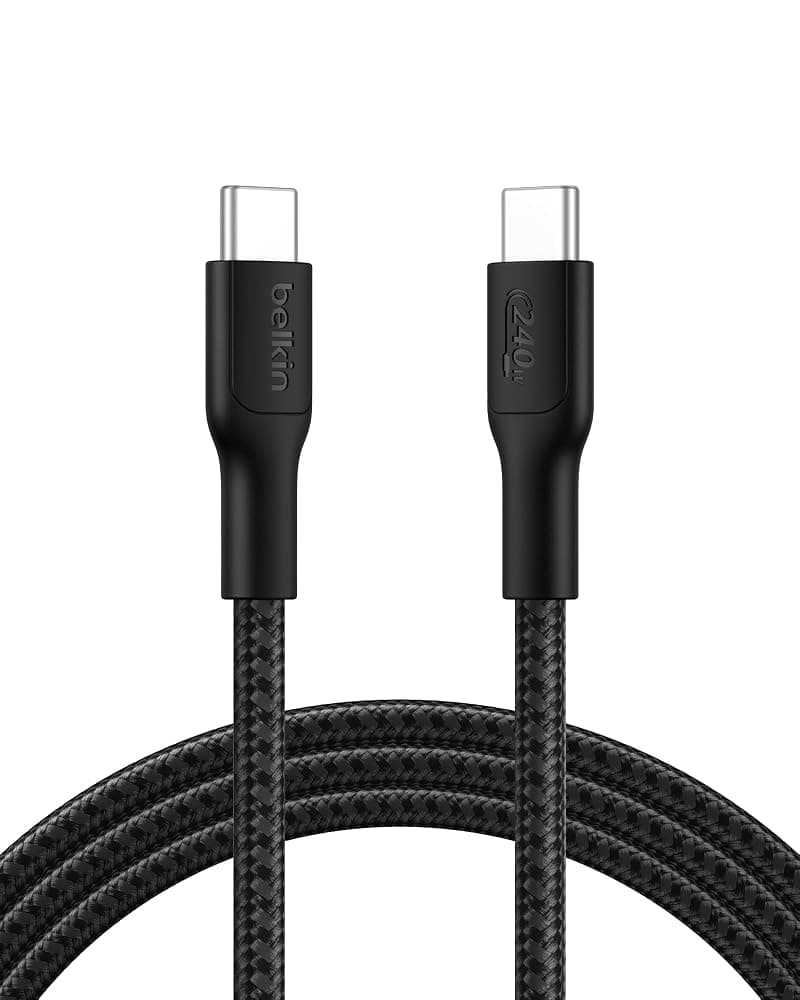
Belkin Eco Braided USB-C cable, 240W
Rated for 240W, so it is the cable to use with the Anker 737 at 140W or with laptops that charge above 100W. Available in 1m, 2m and 3m lengths.
- Search Amazon.ie
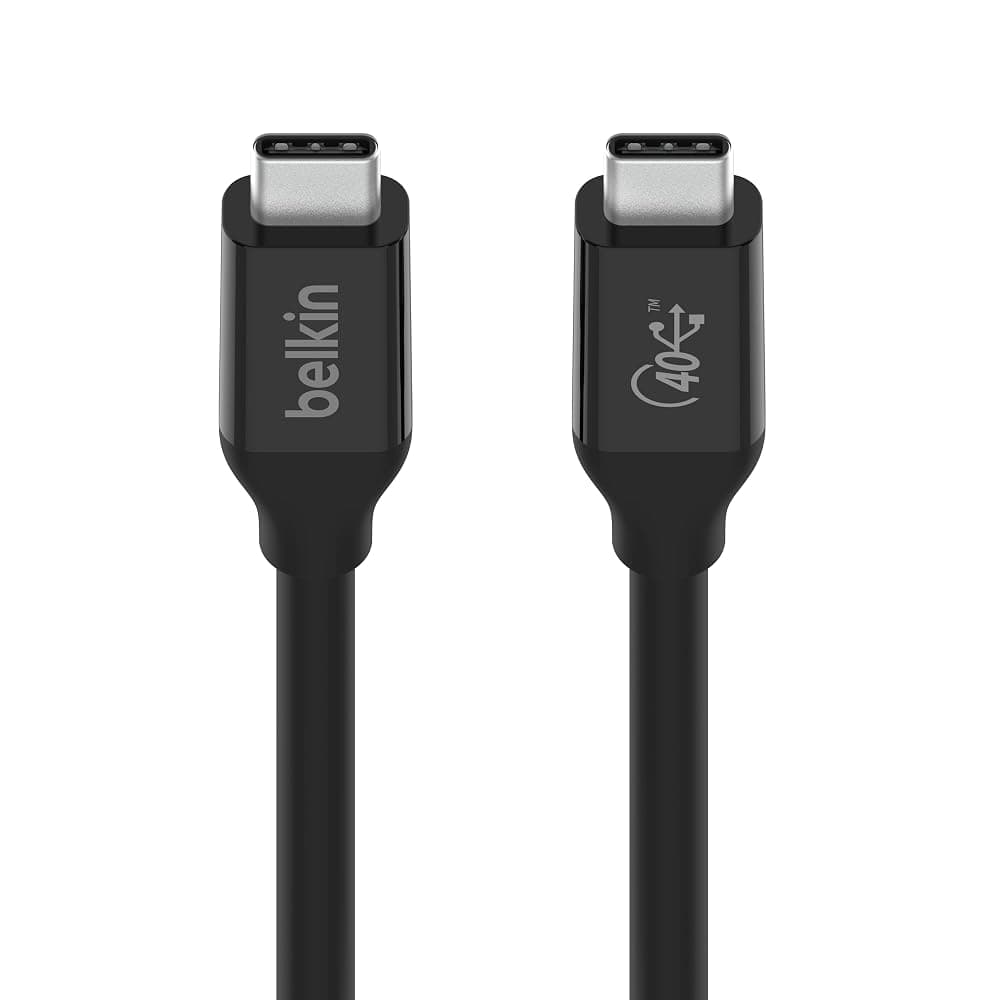
Belkin USB4 USB-C cable
A USB-IF certified cable that carries 100W charging and 40Gbps data, for laptops that connect to a monitor, dock or fast external SSD through the same port.
Power banks and chargers compared
| Power bank | Capacity | Max output | Outputs | Weight | Approx. Wh |
|---|---|---|---|---|---|
| INIU Ultra Mini | 10,000mAh | 45W | 2 x USB-C, 1 x USB-A | 160g | About 37Wh |
| Belkin BoostCharge 20K | 20,000mAh | 30W (shared) | Built-in USB-C cable, USB-C, USB-A | 395g | About 74Wh |
| Anker 737 | 24,000mAh | 140W | 2 x USB-C, 1 x USB-A | Heaviest here | 86.4Wh (Anker) |
| Belkin BoostCharge Pro Qi2 | 8,000mAh | 15W wireless, 20W USB-C | Qi2 magnetic pad, USB-C | 191g | About 30Wh |
| Charger | Total output | Ports | Plug | Best for |
|---|---|---|---|---|
| Anker Prime 100W | 100W | 2 x USB-C, 1 x USB-A | Built-in Irish 3-pin | Home office, laptop plus phone |
| Belkin 100W 3-port | 100W | 2 x USB-C, 1 x USB-A | UK/Irish, EU and US tips | Travel |
| Philips 30W GaN | 30W | 1 x USB-C | Built-in Irish 3-pin | One phone, bedside spare |
Flying with a power bank: the 100Wh rule
Power banks count as spare lithium batteries, so on every airline they must go in your hand luggage, never in a checked bag. Under the international rules most airlines follow, banks up to 100Wh are allowed without approval, those between 100Wh and 160Wh need the airline’s approval, and anything above 160Wh cannot fly on a passenger plane at all. The Wh figure is printed on the bank; if only mAh is shown, multiply the mAh by the cell voltage (usually 3.6V or 3.7V) and divide by 1,000. That puts a 10,000mAh bank at around 37Wh and a 20,000mAh bank at around 74Wh. The largest common banks that stay under 100Wh are about 25,000–27,000mAh.
What to look for when buying
- Real capacity is lower than the label. A power bank delivers roughly 60–70% of its rated mAh to a phone, because energy is lost converting voltage and as heat. Wireless banks lose more. Size up if you are relying on one for a full day away from a socket.
- USB-C Power Delivery is the standard to look for. Current iPhones and iPads, nearly all Android phones and USB-C laptops charge over USB PD. Apple says a 20W or higher USB-C charger fast-charges an iPhone. Samsung’s Super Fast Charging also needs a standard called PPS; without it a Galaxy falls back to its slower fast-charge rate.
- Match the wattage to the device. Phones and tablets need around 20–45W, and most thin-and-light laptops 45–65W. Larger laptops use 96–140W or more. Check the wattage printed on your laptop’s own charger. A higher-wattage charger is safe for a phone: the two negotiate and the phone only draws what it can take.
- Read the per-port figures on multi-port chargers. “100W” is usually the total. With three devices plugged in, each port gets a share, and the laptop port may drop well below 100W.
- Use the right cable. Ordinary USB-C cables carry up to 60W. For 100W you need a cable rated for 100W (5A), and for anything above 100W, such as the Anker 737’s 140W, a cable rated for 140W or 240W.
- Buy GaN for wall chargers. Gallium nitride chargers are much smaller than older chargers of the same wattage, which matters with Irish sockets that sit close together or behind furniture.
- Get a proper Irish/UK 3-pin plug. A fused BS 1363 plug sits firmly in the socket. A European 2-pin charger in a travel adaptor works, but it is wobbly and easy to knock out, so avoid it for everyday use.
- Stick to known brands from a reputable seller. Lithium cells are where cheap, unbranded products cut corners. Check for CE marking and a named manufacturer with a warranty.
Charging all of this costs very little. Refilling a 10,000mAh bank takes around 0.04–0.05kWh from the wall once losses are counted, which is about 1.5c at an electricity price of around 32c per kWh. If you are buying gadgets to go with your charger, see our wireless earbuds guide, headphones guide and tablets and e-readers guide. Switch 2 owners will find cases and other travel kit in our Switch 2 accessories guide.
Battery safety and recycling in Ireland
- Do not charge a power bank under a pillow, on a duvet or in direct sun on a car dashboard. Lithium batteries need air around them to shed heat.
- If a power bank swells, gets unusually hot, smells or hisses, stop using it, unplug it and move it away from anything flammable.
- Never put lithium batteries or power banks in a household bin: crushed batteries start fires in bin lorries and recycling plants.
- In Ireland, shops that sell portable batteries must take used ones back free of charge, whether or not you buy anything, and civic amenity sites accept them too. Old chargers and cables can go to WEEE collection points.