The short answer
Garmin, Fitbit and Apple all count steps, track heart rate and sleep, and log workouts well enough for most people. The real differences are in which phone they need, how often you charge them, and what you pay for after you buy. Pick the ecosystem first and the model second, because once a few years of runs, sleep and heart-rate history live in one app, switching is a nuisance.
- Choose Apple Watch if you have an iPhone and want one device for notifications, replies, Apple Pay, safety features and fitness. It is the most capable smartwatch of the three, and the one you charge most often.
- Choose Garmin if you run, cycle, hike or swim seriously, want physical buttons that work in the rain, or want a week or more between charges. It works with Android and iPhone, and its training tools are free.
- Choose Fitbit if you want a slim, simple band with friendly sleep and activity insights and you are happy with a Google account. Some headline features need Fitbit Premium, and Fitbit was not in Amazon.ie’s own stock when we checked.
- Choose Samsung Galaxy Watch or Google Pixel Watch if you have an Android phone and want an Apple Watch-style smartwatch. Samsung works best with a Galaxy phone; neither works with an iPhone.
- Choose Xiaomi, Huawei or Amazfit if you want long battery life and no subscription for less money, and you do not need a big app store.
If you already know you want a band or a running watch and just need models, our fitness trackers guide and running watches guide go model by model. This page is about choosing the system that fits your phone and your habits.
Garmin vs Fitbit vs Apple Watch side by side
| Garmin | Fitbit (and Pixel Watch) | Apple Watch | |
|---|---|---|---|
| Works with | Android and iPhone | Fitbit bands: Android and iPhone, Google account needed. Pixel Watch: Android only | iPhone only |
| Battery between charges | Usually a week or more on Forerunner models (up to 11–13 days on the two here) | Up to about a week on the Charge 6; a Pixel Watch needs charging every day or two | Up to 18 hours (SE 3) or 24 hours (Series 11) |
| Built-in GPS | Yes on watches; multi-band on the Forerunner 265 and above | Charge 6 and Pixel Watch yes; Inspire 3 has none | Yes on current models |
| Controls | Physical buttons, plus a touchscreen on AMOLED models | Mostly touchscreen | Touchscreen, Digital Crown and side button |
| Training depth | The deepest: training status, HRV status, suggested workouts, Garmin Coach plans | Lighter; Daily Readiness needs Premium | Good and improving: training load, Pacer, Heart Rate Zones |
| Sleep | Sleep score, sleep coach and Body Battery, all free | Sleep score free; Sleep Profile and deeper insights with Premium | Sleep score and Vitals app; sleep apnoea notifications on supported models |
| Smart features | Notifications; text replies on Android only; music on some models | Bands: notifications. Pixel Watch: full Wear OS apps | The most: replies, calls, apps, Siri, optional cellular |
| Contactless payments | Garmin Pay on many models; fewer Irish banks than Apple Pay | Google Wallet on supported models; check your bank | Apple Pay, supported by most Irish banks |
| Subscription | Garmin Connect+ (optional) | Fitbit Premium (optional, but holds some headline features) | Apple Fitness+ (optional) |
| In Amazon.ie’s own stock when we checked | Forerunner 165 and 265 | No current models | SE 3 and Series 11, with a newer Series model also listed |
The Dublin Drop — Friday Deals
Price drops on Amazon.ie stock, once a week. No customs fees, no spam.
Free. No spam. Unsubscribe anytime. We only send verified domestic deals.
Start with your phone
This is the one that catches out gift-buyers every Christmas. An Apple Watch needs an iPhone to set up and use, full stop; it will not pair with an Android phone. Samsung’s Galaxy Watch and Google’s Pixel Watch go the other way and need Android. Garmin, Fitbit bands, Xiaomi, Amazfit and Huawei work with both, which makes them the safe choice if you are buying for someone else or might switch phones in the next couple of years.
| Brand | iPhone | Android | Worth knowing |
|---|---|---|---|
| Apple Watch | Yes | No | Needs a reasonably recent iPhone on a current iOS version; check Apple’s site for the minimum model |
| Garmin | Yes | Yes | Replying to texts from the watch works on Android only |
| Fitbit bands | Yes | Yes | Needs a Google account; quick replies are Android only |
| Google Pixel Watch | No | Yes | Fitbit health tracking is built in |
| Samsung Galaxy Watch | No | Yes | Some health features, such as ECG, need a Samsung Galaxy phone |
| Xiaomi, Amazfit | Yes | Yes | Free apps (Xiaomi’s own app and Zepp) |
| Huawei | Yes | Yes | On Android, the Huawei Health app may come from AppGallery rather than Google Play |
Battery life: days versus hours
Battery life is the biggest practical difference between these ecosystems, and it changes how you use the watch. A Garmin Forerunner or a budget band goes on the charger once a week or less, so it rarely misses a night of sleep tracking or a spontaneous run. An Apple Watch needs a daily top-up; most owners charge it while they shower and get ready in the morning and wear it to bed. That works fine as a routine, but it is a routine.
| Watch | Everyday use | With GPS | Budget band |
|---|---|---|---|
| Apple Watch SE 3 | Up to 18 hours (32 in Low Power Mode) | Less with long GPS workouts | Under €300 |
| Apple Watch Series 11 | Up to 24 hours (38 in Low Power Mode) | Less with long GPS workouts | €400–€500 |
| Garmin Forerunner 165 | Up to 11 days | Up to 19 hours | €200–€300 |
| Garmin Forerunner 265 | Up to 13 days | Up to 20 hours | €300–€500 |
| Fitbit Charge 6 (not in Amazon.ie stock) | Up to 7 days | Much less with GPS on | Check the listing |
| Xiaomi Smart Band 10 | Up to 21 days | No built-in GPS | Under €50 |
Do not expect a mains plug in the box: these come with a USB charging cable or magnetic dock, and the chargers are brand-specific. Apple’s cable ends in USB-C; a spare charger for work or a weekend away is worth having, and our power banks and chargers guide covers Irish 3-pin USB plugs.
GPS, running and training
For running, cycling and hillwalking, Garmin is the clear leader. Every Forerunner has built-in GPS, five physical buttons that work with wet or gloved hands on a dark January morning, and free training tools that Apple and Fitbit either lack or charge for: daily suggested workouts that adapt to your recovery, Garmin Coach plans for races from 5k upwards, HRV status overnight, and a morning report that sums up sleep and readiness. The Forerunner 265 adds multi-band GPS, which helps most among tall buildings and under heavy tree cover, plus Training Readiness and onboard music storage.
Apple Watch is a capable running watch with good built-in GPS, Pacer, Heart Rate Zones, training load and custom workouts, and it suits someone who runs two or three times a week and wants one device for everything. The trade-offs are the touchscreen in the rain and the battery: a long training run plus a day of notifications will drain it before bedtime. Fitbit is the lightest of the three for training. The Charge 6 has built-in GPS and can share heart rate with compatible gym equipment and apps, but its small screen and lighter coaching make it better for staying active than for following a plan.
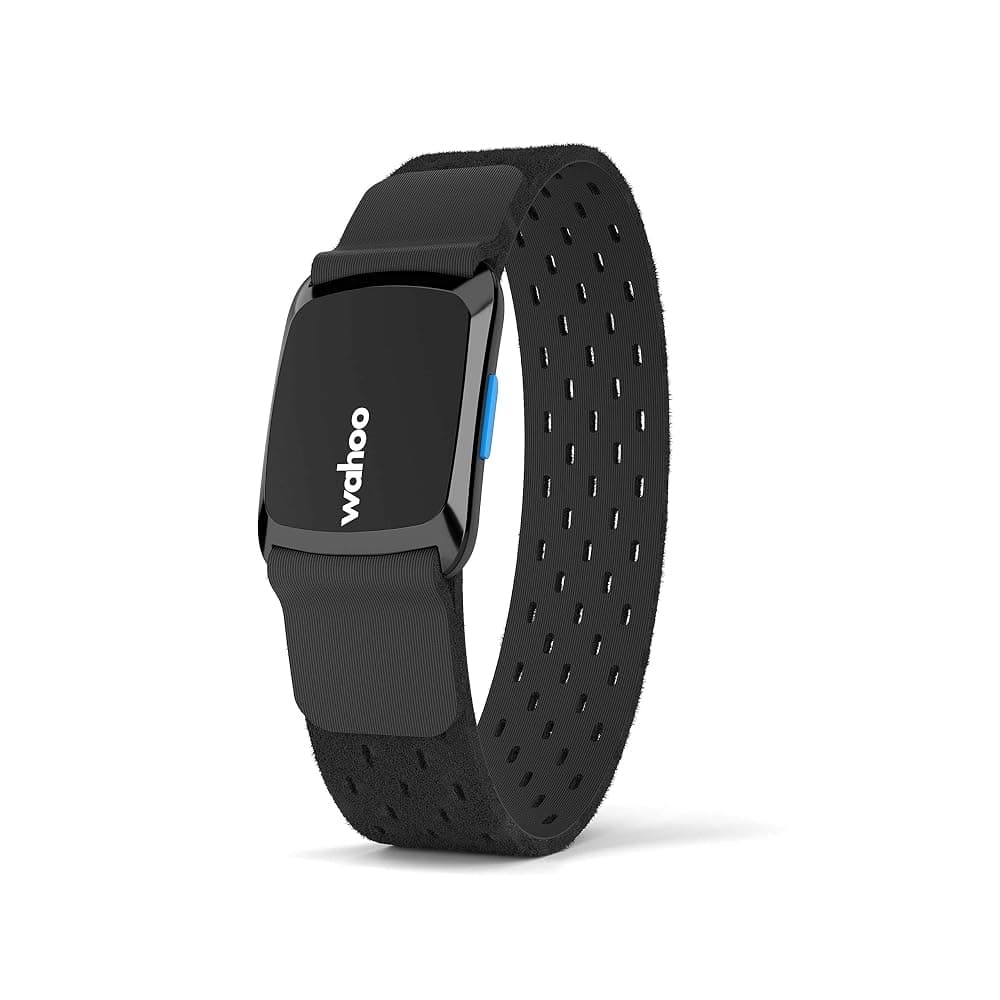
Wahoo TICKR FIT Optical Heart Rate Armband – Bluetooth & ANT+, USB Rechargeable
See today's price on Amazon.ie.
Check price on Amazon.ieSleep and health tracking
- Fitbit built its name on easy-to-read sleep tracking, and the free sleep score is still good. Sleep Profile, Daily Readiness and the deeper insights sit behind Fitbit Premium. A slim band like the Charge 6 or Inspire 3 is also more comfortable in bed than a large watch.
- Garmin gives you a sleep score, sleep coach, overnight HRV status and Body Battery (an energy estimate built from sleep, stress and activity) free on most current watches, and the long battery means it is on your wrist every night.
- Apple Watch now has a daily sleep score on the SE 3 and Series 11, overnight metrics in the Vitals app, and, on supported models, notifications for possible sleep apnoea. The Series 11 adds the ECG app, blood oxygen readings and hypertension notifications, which Apple describes as spotting signs of chronic high blood pressure over time. Check Apple’s Irish site for which health features are available here.
- Treat them as trend-trackers, not a diagnosis. Sleep stages, calorie burn and readiness scores are estimates. Even the regulated features, such as an ECG reading or a hypertension notification, are a prompt to see your GP, not a replacement for one.
Smart features and contactless payments
If you want a true smartwatch, Apple Watch is ahead: reply to WhatsApp and iMessage, take calls on your wrist, use Siri, find your phone, and choose from thousands of apps. A cellular Apple Watch can do much of that without your iPhone nearby, but it needs a plan from your network, so check that your Irish network and plan support it before paying extra for the cellular model. Garmin watches show notifications well and can store music on some models (including the Forerunner 265), but replies are Android only and the Connect IQ app store is far smaller than Apple’s. Fitbit bands are notification devices; for full smartwatch apps on Android, Google’s answer is the Pixel Watch.
| Ecosystem | Wallet | Irish bank support |
|---|---|---|
| Apple Watch | Apple Pay | Supported by most Irish banks and by popular app-based banks; the easiest of the three |
| Garmin | Garmin Pay (on many recent models, including the Forerunner 265) | A shorter list of Irish banks and cards; check Garmin’s Garmin Pay page |
| Fitbit and Pixel Watch | Google Wallet on supported models | Works where your bank supports Google Wallet on that device |
| Samsung Galaxy Watch | Google Wallet (Samsung Wallet where available) | Check your bank |
| Budget bands | Varies by model and region | Often limited or unavailable for Irish cards |
On safety, Apple Watch has Fall Detection, Crash Detection and Emergency SOS; a GPS-only Apple Watch needs your iPhone nearby (or Wi-Fi calling) to call for help. Garmin has incident detection and LiveTrack during outdoor activities when paired with your phone, which suits running or cycling alone on quiet country roads.
Subscriptions and ongoing costs
All three brands track steps, heart rate, sleep and workouts without a subscription. The question is how much of the headline marketing sits behind one. Subscription prices and features change, so check the current details on each brand’s own site; we do not quote prices here.
| Garmin Connect+ | Fitbit Premium | Apple Fitness+ | |
|---|---|---|---|
| What it adds | AI-generated insights, extra performance dashboards and some extra LiveTrack and coaching features | Daily Readiness, Sleep Profile, deeper sleep and health insights, guided workouts and mindfulness sessions | Guided video workouts and meditations on iPhone, iPad and Apple TV, with your watch metrics on screen |
| What stays free | Garmin says features that were already free stay free, including training and recovery tools | Steps, heart rate, sleep score, exercise tracking and notifications | All the tracking on the watch |
| Included with a new device? | Not usually | Many new Fitbit devices include a trial | Apple has been including three months with a new Apple Watch |
| Worth it? | Only if you want the extra analysis; many owners will not miss it | Arguably the most valuable of the three, because Fitbit keeps more core insights behind it | Good if you would otherwise pay for an online class app |
- Add it up over three years. A modest monthly fee can come to more than the price of a budget band over the life of a watch. If you would cancel after the trial, judge the watch on its free features.
- Straps and chargers. Garmin and Apple use widely available strap sizes, and spare chargers are easy to find. Fitbit bands use their own straps. A second strap for sweaty sessions or the pool is a common extra.
- Cellular plans. A cellular Apple Watch carries an ongoing network charge on top of your phone plan. Most people are fine with the GPS model.
- Battery wear. Every lithium-ion battery fades over a few years. Check each maker’s repair and battery service options before you buy if you plan to keep the watch a long time.
The watches to look at in each ecosystem
Everything below with a product card was sold and dispatched by Amazon.ie when we checked, so there are no UK import charges at the door and returns come under EU consumer rights. Current Fitbit, Pixel Watch and Samsung models were not in Amazon.ie’s own stock when we checked (only straps, accessories or older generations turned up), so they appear as search links.
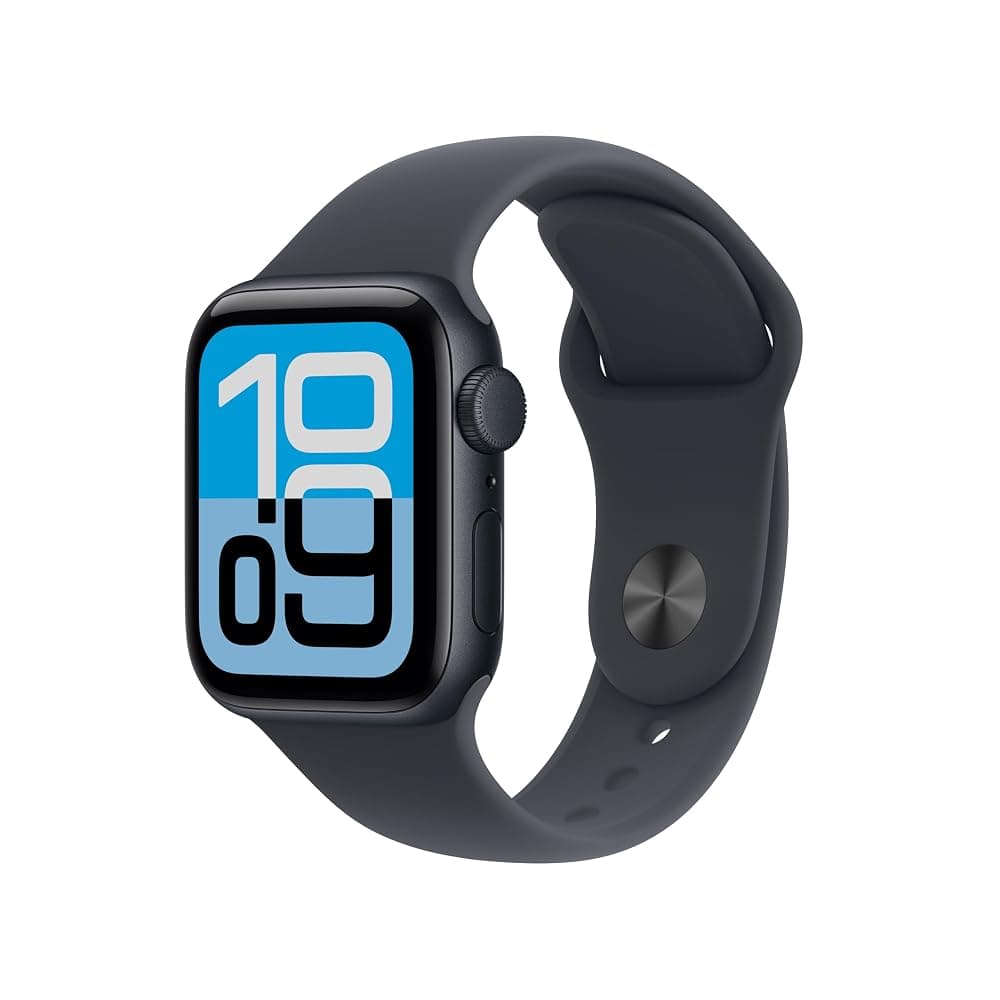
Apple Watch SE 3 (GPS, 40mm) – Midnight Aluminium Case with Midnight Sport Band, M/L
Best for: iPhone owners who want a smartwatch first and a fitness tracker second.
The SE 3 is the sensible way into Apple Watch. It has an always-on display, Apple’s S10 chip, built-in GPS, water resistance to 50m, a daily sleep score and wrist temperature for the Vitals app. Fall Detection, Crash Detection and Emergency SOS make it a strong choice for an older parent with an iPhone, or anyone walking or cycling alone. Apple quotes up to 18 hours of battery (32 in Low Power Mode), so plan on charging most days. Against the Series 11 it skips the ECG app, blood oxygen readings and hypertension notifications.
Pros
- Apple Pay, message replies and the full Apple app store
- Fall Detection, Crash Detection, Emergency SOS and Check In
- Sleep score and temperature sensing
Cons
- iPhone only
- Up to 18 hours of battery (Apple figure)
- No ECG app or blood oxygen readings
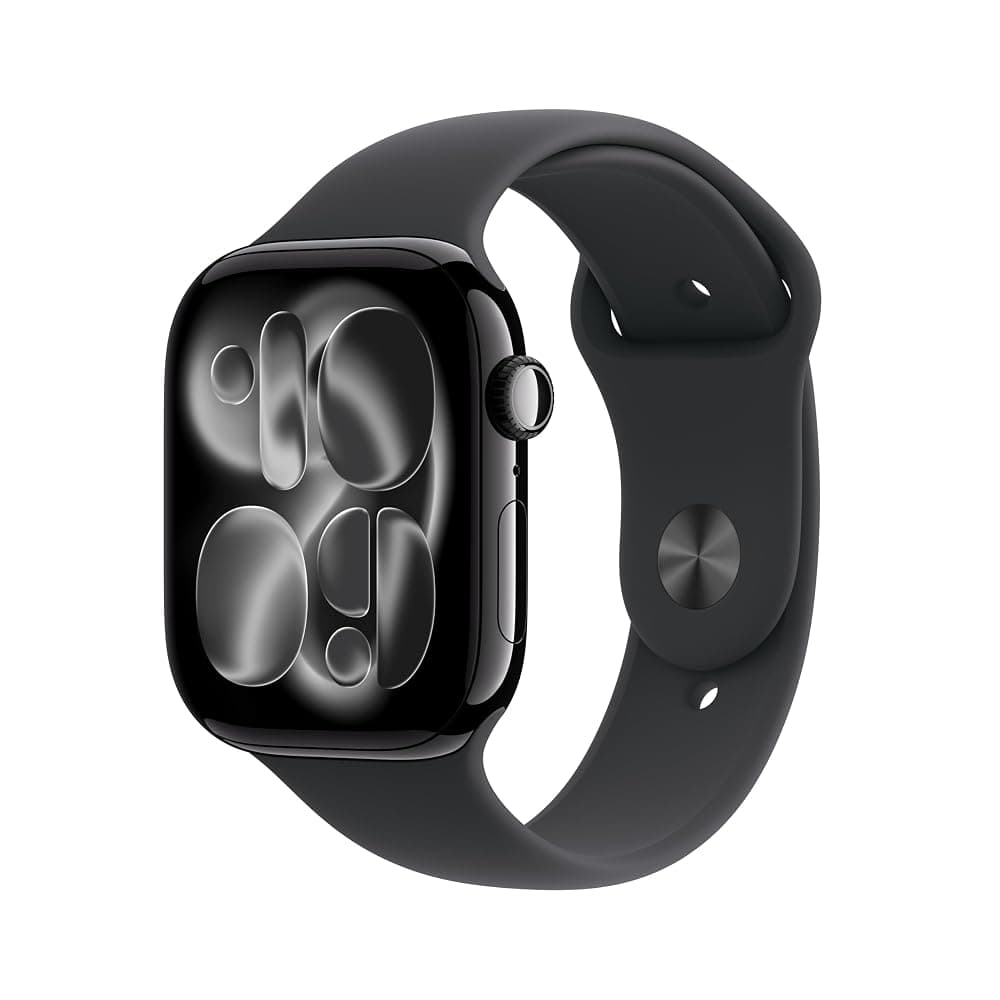
Apple Watch Series 11 (GPS, 46mm) – Jet Black Aluminium Case with Black Sport Band, M/L
Best for: iPhone owners who want the most health data, or who found earlier Apple Watch batteries too short.
The Series 11 is for iPhone owners who want Apple’s fuller set of health tools: the ECG app, blood oxygen readings, hypertension notifications and sleep apnoea alerts alongside the sleep score and Vitals app. Its wide-angle OLED display is larger and brighter than the SE 3’s, under Ion-X glass that Apple says is twice as scratch resistant as the previous generation’s, and Apple quotes up to 24 hours of battery (38 in Low Power Mode) with a fast charge to about 80% in 30 minutes. That extra six hours over the SE 3 is what makes overnight sleep tracking easy to keep up. This listing is the 46mm GPS model with the M/L strap. Apple’s newest Series model was also appearing on Amazon.ie when we checked; compare the two on Apple’s site before paying the difference.
Pros
- ECG, blood oxygen and hypertension notifications
- Up to 24 hours of battery, with fast charging (Apple figures)
- Larger, brighter display than the SE 3, under more scratch-resistant Ion-X glass (Apple figure)
Cons
- iPhone only
- Still a daily or near-daily charge
- Costs noticeably more than the SE 3
- No longer Apple’s newest Series model
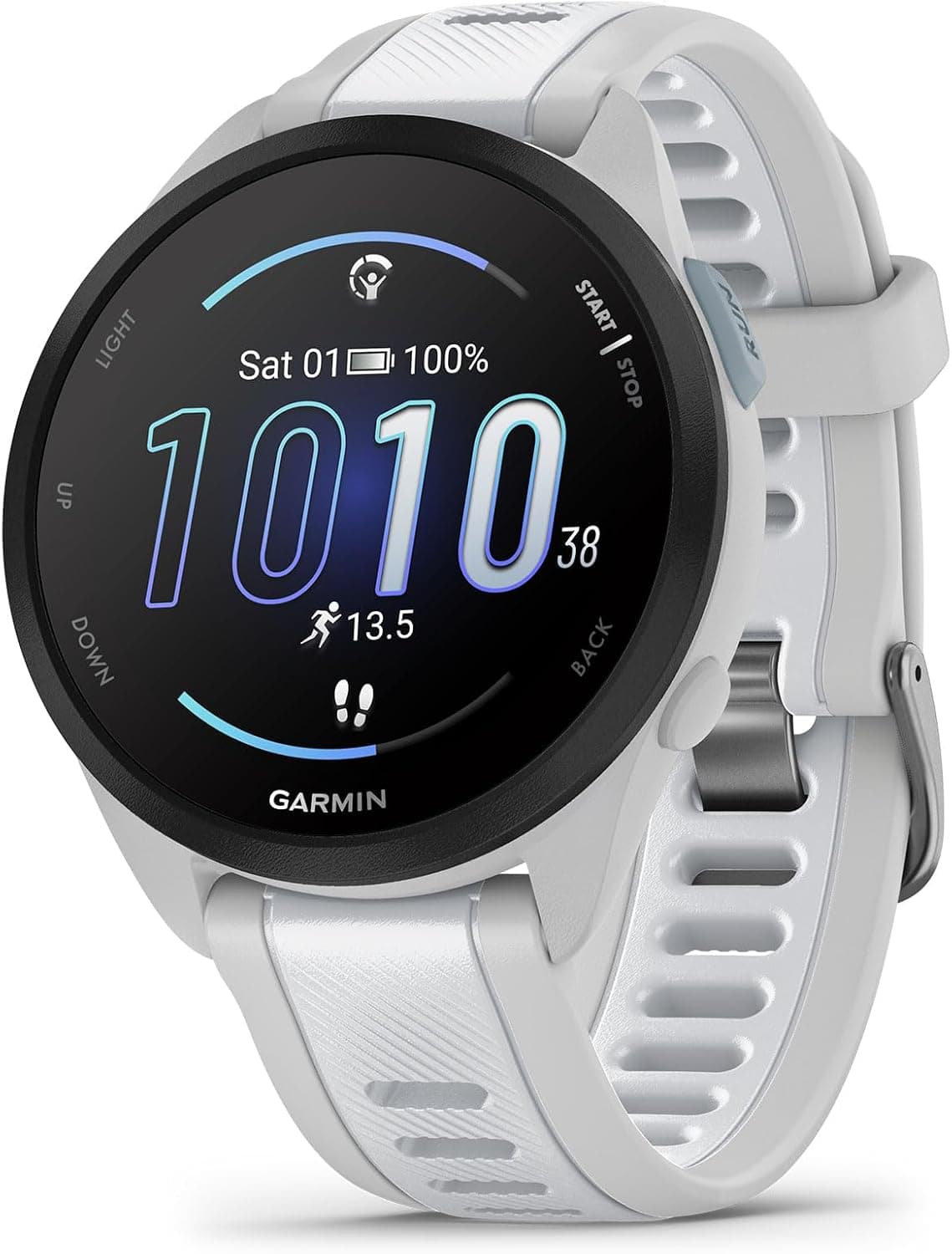
Garmin Forerunner 165 GPS Running Smartwatch – 43mm AMOLED Touchscreen (Whitestone)
Best for: Runners, cyclists and walkers, Android owners, and anyone who would rather not charge every night.
Amazon.ie price as of 26 Oct 2026, 06:46. May have changed.
The Forerunner 165 is the easiest way into Garmin and a very good everyday fitness watch, not just a running one. It has built-in GPS, a bright AMOLED touchscreen backed by physical buttons, and Garmin quotes up to 11 days in smartwatch mode and 19 hours of GPS. The morning report sums up sleep, HRV status and training outlook, suggested workouts adapt to your recovery, and incident detection can alert a contact during outdoor activities when paired with your phone. It works with Android and iPhone, and the core features need no subscription. It looks sportier than an Apple Watch, has far fewer apps, and this standard version has no music storage.
Pros
- Works with Android and iPhone
- Up to 11 days per charge (Garmin figure)
- Buttons that work in the rain
- Free training plans and recovery tools
Cons
- Sporty looks
- Message replies on Android only
- No music on this version
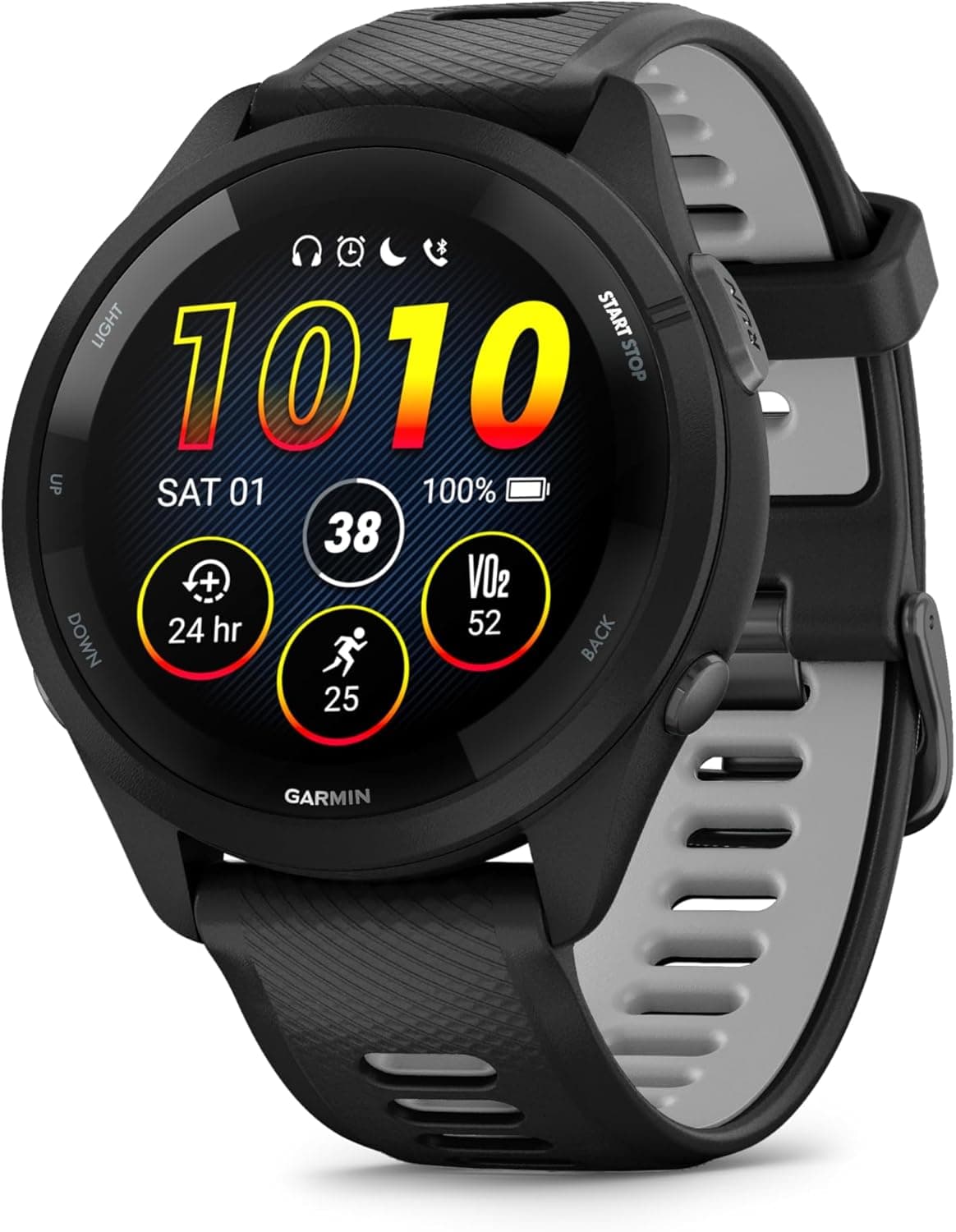
Garmin Forerunner 265 GPS Running Smartwatch with Bright AMOLED Touchscreen & Training Readiness
Best for: Regular runners training for a 10k, half or full marathon.
Amazon.ie price as of 26 Oct 2026, 09:26. May have changed.
The Forerunner 265 is the step up for runners following a plan. Multi-band GPS improves accuracy around tall buildings and under trees, Training Readiness combines sleep, HRV and recent load into a daily go-hard-or-ease-off signal, and onboard music storage lets you leave the phone at home. Garmin quotes up to 13 days in smartwatch mode and up to 20 hours of GPS, and it keeps the five buttons and AMOLED screen. It is more watch than a casual walker needs, but for a spring half or next year’s marathon it is a good long-term buy.
Pros
- Multi-band GPS
- Training Readiness and HRV status
- Music storage
- Up to 13 days per charge (Garmin figure)
Cons
- More than casual users need
- No onboard maps for navigation
Fitbit, Pixel Watch and Samsung to check on Amazon.ie
Links open an Amazon.ie search filtered to items sold & dispatched by Amazon.ie. Availability changes.
- Search Amazon.ie
Fitbit Charge 6
Fitbit’s main band, with built-in GPS, up to 7 days of battery (Google figure) and Google Wallet on supported banks. Some features need Fitbit Premium and set-up needs a Google account. Check the seller before you buy.
- Search Amazon.ie
Fitbit Inspire 3
Fitbit’s simplest band, with a colour screen and up to 10 days of battery (Google figure), but no built-in GPS.
- Search Amazon.ie
Google Pixel Watch
Google’s smartwatch with Fitbit tracking built in and full Wear OS apps. Android only, and it needs charging every day or two. Older generations still turn up, so check which one you are looking at.
- Search Amazon.ie
Samsung Galaxy Watch
The natural pick for Samsung Galaxy phone owners: Wear OS with Google apps and Samsung Health. Android only, with some health features needing a Galaxy phone; plan to charge it every day or two. Older generations turn up too, so check which one you are looking at.
- Search Amazon.ie
Apple Watch, newest Series model
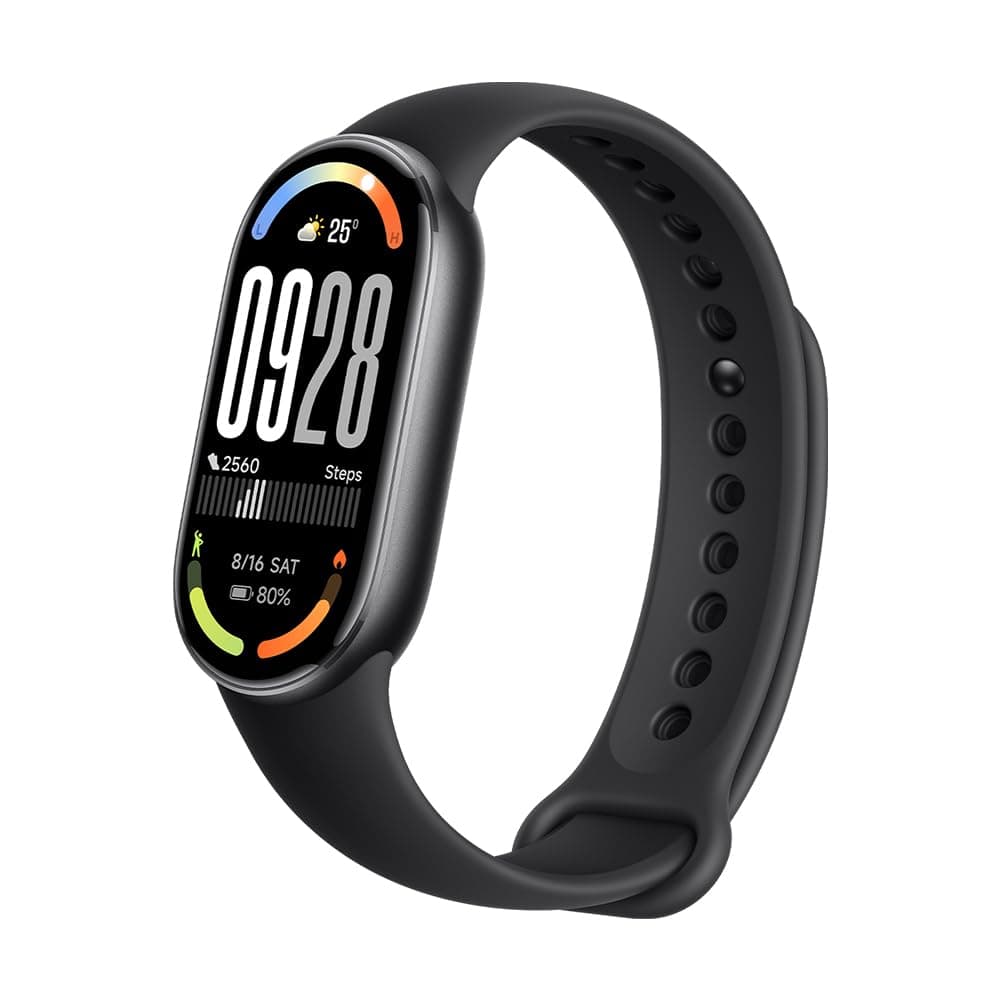
Apple’s newest Series watch was showing in Amazon.ie stock when we checked. Compare it with the Series 11 on Apple’s site to see whether the changes matter to you.
The budget alternatives. If you do not need an app store, Xiaomi, Huawei and Amazfit offer long battery life, work with any phone and charge no subscription for the core features. The Xiaomi Smart Band 10 is the closest thing to a cheap Fitbit Inspire, the Huawei Band 11 Pro adds built-in GPS, and the Amazfit Active 2 is a full GPS smartwatch with offline maps and up to 10 days of battery (Amazfit figure).
Xiaomi Smart Band 10 Fitness Tracker – 1.72-inch AMOLED, Up to 21-Day Battery, 5ATM
See today's price on Amazon.ie.
Check price on Amazon.ie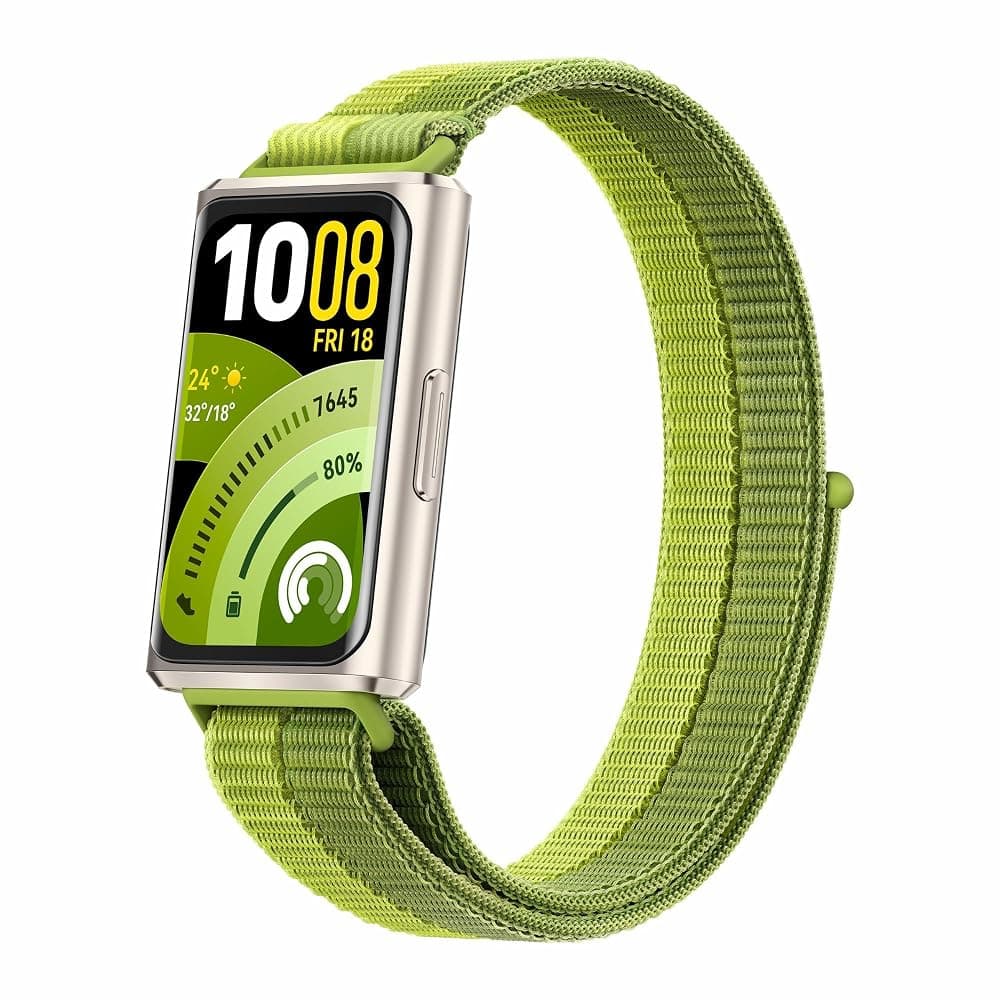
HUAWEI Band 11 Pro Fitness Tracker with Built-in GNSS – 1.62-inch AMOLED, up to 2000 nits (Green)
See today's price on Amazon.ie.
Check price on Amazon.ie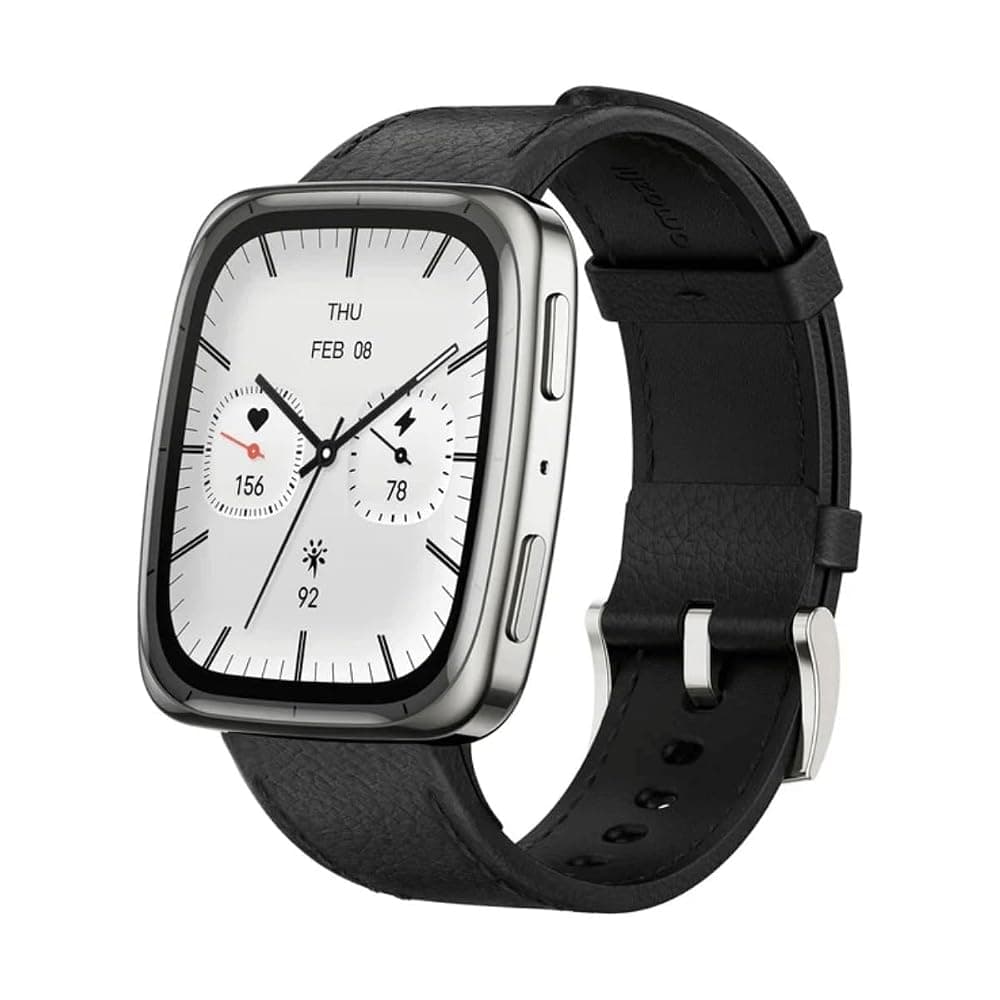
Amazfit Active 2 Square Smartwatch – 1.75-inch AMOLED, Sapphire Glass, GPS & Offline Maps, NFC (Black Leather)
See today's price on Amazon.ie.
Check price on Amazon.ieWhich should you get? Scenarios
- If you have an iPhone and want one device for everything, get the Apple Watch SE 3. Step up to the Series 11 if you want ECG, blood oxygen and a longer battery.
- If you have an Android phone and run or cycle, get the Garmin Forerunner 165. If you want a smartwatch first, look at a Samsung Galaxy Watch (with a Galaxy phone) or a Pixel Watch.
- If you might switch between iPhone and Android, stay with Garmin, Amazfit or Xiaomi, which work with both and keep your history in the same app.
- If you are training for a half or full marathon, get the Garmin Forerunner 265 for multi-band GPS, Training Readiness and music.
- If you hate charging, get a Garmin or the Xiaomi Smart Band 10. An Apple Watch is probably the wrong choice for you, however good it is otherwise.
- If you loved your old Fitbit and want the same feel, search for the Fitbit Charge 6 or Inspire 3 (check the seller), or take the Xiaomi Smart Band 10 from Amazon.ie stock for similar daily tracking with no subscription.
- If you are buying for an older parent with an iPhone, get the Apple Watch SE 3 for Fall Detection and Emergency SOS. With an Android phone, look at a Samsung Galaxy Watch or Pixel Watch, which also offer fall detection (check the current model’s details); Garmin’s incident detection only works during recorded activities, so it is a weaker safety net.
- If you want GPS on a budget with any phone, get the Huawei Band 11 Pro or the Amazfit Active 2.
- If you do spin, HIIT or gym classes, add the Wahoo TICKR FIT to whichever watch you choose for steadier heart-rate readings.
Switching ecosystems later
Your history mostly stays where it was recorded. Garmin Connect, the Fitbit app and Apple Health each hold years of runs, sleep and heart-rate data, and while you can export some of it, it will not move neatly into a rival app. If you log workouts in Strava, that part of your history follows you, because Garmin, Fitbit and Apple Watch all sync to it. The practical lesson: if you are an iPhone owner who might go Android, or the other way round, a cross-platform brand like Garmin saves you starting again.
Buying as a Christmas present? Order early and keep the box; our returns guide covers the holiday returns window. For music on your runs, see wireless earbuds and AirPods Pro alternatives. More in Sports & Fitness guides, Tech & Gadgets guides and the Sports & Outdoors category.